Author: Oliver Loutsenko

  • What is Cryptocurrency and is it a Good Investment in 2021? Here’s What You Need to Know

    Cryptocurrency is a form of payment that can be exchanged online for goods and services. Many companies have issued their own currencies, often called tokens, and these can be traded specifically for the good or service that the company provides. Cryptocurrencies work using a technology called blockchain. Blockchain is a decentralized technology spread across many computers that manages and records transactions. A large part of the appeal of this digital technology is in its security.

    Just recently, in the middle of April 2021, many cryptocurrencies, including Bitcoin, have hit their all-time peak trading price. The table below shows the 10 largest trading cryptocurrencies by market capitalization as tracked by CoinMarketCap, a cryptocurrency data and analytics provider.

    It may be surprising for readers to learn there are currently over 6,700 different cryptocurrencies that are publicly traded, with a total market capitalization of over $2.2 trillion (CoinMarketCap). But the central question remains: why have cryptocurrencies continued to skyrocket in popularity and are they a good investment?

    Studies have shown different reasons for the rise in cryptocurrency trading, but there are definite common denominators between the different sources. There’s the most popular reason; investors see this as the ‘currency of the future’, therefore they are buying now in anticipation of elevated future prices. Secondary reasons include a particular interest in crypto’s technology and security aspects (as previously mentioned), plus many investors cite them as being immune from inflation concerns, since there are no central bank regulations. Finally, crypto’s are attractive investments to swing sellers due to their relatively large and very rapid market price changes. For example, while Bitcoin traded at close to $20,000 in December 2017, its value then dropped to as low as about $3,200 a year later. By December 2020, it was trading at record levels again.

    Finally, onto the golden question every market participant looks to make sense of: are cryptocurrencies a good investment at this time? Unfortunately, the answer isn’t a straightforward yes or no. As with the lastly cited example of Bitcoin, you can make a lot of money in a short period of time, if you are entering and exiting the market at a wise time. However, it’s important to keep in mind that at this stage, these are purely speculative investments with no tangible assets to back them. Nonetheless, investors are looking for undervalued assets or securities but just like any other currency, cryptocurrencies generate no cash flow, so for you to profit, someone has to pay more for the currency than you did. This is specifically dubbed “the greater fool” theory of investment. Contrast that to a well-managed business, which increases its value over time by growing the profitability and cash flow of the operation. The latter is a far more stable, confident, long-term investment at, which is where cryptocurrencies are currently lacking; there seems to be a general consensus, especially amongst more passive longer-term investors, that cryptocurrencies have a very serious lack of predictability. No matter how interesting the concept is, for those who believe crypto’s like Bitcoin are the ‘currency of the future’, it has to be noted that a currency eventually needs to build a proven track record of stability to continue to enthuse new investors.

  • Passive Real Estate Investing

    When reading about real estate investing, often times investors think of active real estate investors, who are essentially landlords. There are also both direct and indirect passive real estate investors. Passive real estate investing is investing in real estate without substantial hands-on effort or active participation from the investor. They invest through syndications, online crowdfunding, individual real estate funds, and real estate investment trusts. In fact, many would argue passive real estate investing requires the least experience and hassle while offering more diversification and liquidity.

    Direct Passive Real Estate Investing

    With direct real estate investing, an investor will purchase a property or portion of a property that is subsequently rented out. Often, real estate investors that purchase entire properties will hire what is known as a property manager, or property management company, to take care of the day to day maintenance and tasks such as collecting rent. Post-purchase of the property, hiring a property management company allows an investor to essentially be hands-off in the management of the property. Hence the term passive real estate investing in this context.

    Indirect Passive Real Estate Investing

    To the contrary, indirect real estate investing is a process where individuals invest in a REIT (Real Estate Investment Trust) or a real estate related mutual fund. This type of real estate investing is considered passive because there is no day-to-day management needed and it’s also considered indirect because it doesn’t involve a specific piece of real estate. Investors then collect passive income as returns or dividends from funds.

    Regardless of which method you prefer, there is a great potential for positive cash flow and overall wealth generation in real estate investment markets. In upcoming posts, we’ll dive into more specifics about REITs, as well as other types of real estate funds investors are often more drawn to.

  • What Exactly is a Subprime Mortgage?

    What Exactly is a Subprime Mortgage?

    A subprime mortgage is a type of housing loan granted to individual with a poor credit score – 640 or less (and even below 600) – who, as a result of their poor credit rating would not qualify for more conventional mortgages. The term subprime itself is referring specifically to the borrower’s credit score – thus their ability to pay back their financial obligation – rather than the financial agreement embedded in the loan itself. Subprime borrowers are implicitly more likely to default than others with a higher credit score.

    Types of Subprime Mortgages

    In essence, subprime mortgages are mortgages given to subprime borrowers. The main types of subprime mortgages include fixed-rate mortgages with 40- to 50-year terms, interest-only mortgages, and adjustable rate mortgages (ARMs).

    Fixed-Interest Mortgages

    One type of subprime mortgage is a fixed-rate mortgage, given for a 40- or 50-year term, in contrast to the standard 30-year period. This lengthy loan period lowers the borrower’s monthly payments, but it is more likely to be accompanied by a higher interest rate. The interest rates available for fixed-interest mortgages can vary substantially from lender to lender. Higher interest rates over a lengthy period of time means the borrower will be under constant pressure to meet their monthly obligations over a prolonged period of time; additionally, it means that the lender will gain a lot of interest of their principal if the loan is paid off.

    Adjustable-Rate Mortgages

    An adjustable-rate mortgage starts out with a fixed interest rate and later, during the life of the loan, switches to a floating rate. One common example is the 2/28 ARM. The 2/28 ARM is a 30-year mortgage with a fixed interest rate for two years before being adjusted. Another typical version of the ARM loan, the 3/27 ARM, has a fixed interest rate for three years before it becomes variable.

    In these types of loans, the floating rate is determined based on an index plus a margin. A commonly used index is ICE LIBOR. With ARMs, the borrower’s monthly payments are usually lower during the initial term. However, when their mortgages reset to the higher, variable rate, mortgage payments usually increase significantly. Of course, the interest rate could decrease over time, depending on the index and economic conditions, which, in turn, would shrink the payment amount.

    According to CNN Money’s Les Christie, “ARMs played a huge role in the crisis”. When home prices started to drop, many homeowners understood that their homes weren’t worth the amount the purchase price. This, coupled with the rise in interest rates led to a massive amount of default. This led to a drastic increase in the number of subprime mortgage foreclosures in August of 2006 and the bursting of the housing bubble that ensued the following year.

    Interest-Only Mortgages

    The third type of subprime mortgage is an interest-only mortgage. For the initial term of the loan, which is typically five, seven, or 10 years, principal payments are postponed so the borrower only pays interest. He can choose to make payments toward the principal, but these payments are not required.

    When this term ends, the borrower begins paying off the principal, or he can choose to refinance the mortgage. This can be a smart option for a borrower if his income tends to fluctuate from year to year, or if he would like to buy a home and is expecting his income to rise within a few years.

    Dignity Mortgages

    The dignity mortgage is a ‘new type of subprime loan’, in which the borrower makes a down payment of about 10% and agrees to pay a higher rate interest for a set period, usually for five years. If he makes the monthly payments on time, after five years, the amount that has been paid toward interest goes toward reducing the balance on the mortgage, and the interest rate is lowered to the prime rate.

  • Mining Bitcoin: Tech Energy and Power

    For years, Bitcoin has been popularized as the face of cryptocurrency. After Bitcoin was introduced, it received critical backing from several prominent celebrity investment advisors and other notable figures, significant popularity followed. Once Bitcoin gained a platform, it gave rise to tens of thousands of other cryptocurrencies being mined and traded daily. Whether you believe in crypto’s or not, it’s hard to argue we’re not in the middle of one of the most exciting cryptocurrency trading times. While many participate in daily trading on platforms like Robinhood, Coinbase, CashApp, etc., not many of them have any insight into the technological know-how on creating a Bitcoin, or the Bitcoin energy required.

    In reality, the computer-based miners who create bitcoins use vast amounts of electrical power and energy in the process. The energy-heavy process even leads some experts to suggest that Bitcoin harms the environment. The process, known as “mining,” requires computers around the world to complete rapid calculations to try to solve the same puzzle. It always takes 10 minutes, and the winner is rewarded with some digital bitcoin. Then a new puzzle is generated, and the whole process repeats for another 10 minutes (Bradbury, The Balance).

    Breakdown of Bitcoin’s Power & Energy Output

    As more people learn about Bitcoin and mining—and as the price of Bitcoin increases—more are using their computers to mine Bitcoins. As more people join the network and try to solve these math puzzles, you might expect each puzzle to be solved sooner, but Bitcoin is not designed that way. The software that mines bitcoin is designed so that it always will take 10 minutes for everyone on the network to solve the puzzle. As more people join the Bitcoin network and try to mine Bitcoins, it becomes harder, and more computing power and electricity are used for each Bitcoin produced. It minimizes downtime, so you can mine more efficiently. That means a near-constant cycle of electricity use.

    To understand how to calculate the electrical energy used to power the bitcoin network, you’ll need to learn how Bitcoin creation works. First, you calculate how many sums are conducted per second to solve the puzzles. Then find out how much electricity it takes to do each sum. These sums are called “hashes” (Faife, CoinDesk). In early 2020, the computers on the Bitcoin network were cranking out close to 120 exahashes per second (Redman, BTC News). To calculate the cost of how much power it would take you to create a bitcoin, you need to know a few things first (Bradbury, The Balance). First, what is the cost of electricity where you live? Second, how much power would you consume? More efficient computer equipment uses less power, which means lower power bills. The lower the price of electricity, the less cost there is to miners. This increases the value of the Bitcoin to miners where the costs are lower to produce.

    The Conclusion: To Be Determined

    This is meant to emphasize that the energy and power utilized by Bitcoin and other cryptocurrency miners is a real, potential danger to the future global environment. Conversely, it may also leave a very low impact. The price that Bitcoin extracts in terms of energy use and environmental impact depends on how useful it will be to society (Bradbury, The Balance). Judging an ever-moving target is hard. The interest in Bitcoin continues to rise, which in turn leads to more power used to serve more people in the market. Therefore, ultimately deciding whether Bitcoin mining is worth the cost to the environment is still a very open question.

  • What is a Tri-Party Repo (TREPS)and How Did the Market Operate?

    What is a Tri-Party Repo (TREPS)and How Did the Market Operate?

    The simplest way to understand a tri-party repo (TREPS) is to think of it as a simple repurchase agreement between two parties, where a third-party – historically a very large and reputable bank (only JPM Chase or BNY Mellon, during the time these transactions were widely common) – processes administrative work and even guarantees the cash provided by Company A to Company B and the collateral Company B secures the cash from Company A with. These third parties, commonly referred to as clearing banks, also performed valuation services to ensure the collateral put up by Company B was within the approximate fair market value of the cash lent by Company A.

    Tri-Party Repos in the Derivative Era

    These transactions actually became popular at the “boom” of the derivative trading era – even though they had a comparatively low-yield percentage for both companies – mainly because of mechanics of how these transactions occurred. They were typically cleared and settled overnight, so the investment banker would have the cash available in the morning when the trading day began. The “unwinding” process of this repo would also happen after the trading day was complete; the dealer (Company B) would finance the broker (Company A) with cash and the third-party clearing bank would take care of the rest for a small fee.

    To be clear, the responsibilities of the clearing banks weren’t minuscule, they were tasked with: taking custody of the securities involved in the repo, valuing the securities and making sure that the specified margin is applied, settling the transaction on their books, and offer services to help dealers optimize the use of their collateral. However as mentioned, to give dealers access to their securities during the day, the clearing banks settle all repos very early each day, returning cash to cash investors and collateral to dealers. This would lead to a delay in real-time settlement, therefore in reality the clearing banks wind up extending hundreds of billions of intraday credit to the dealers until new repos are settled in the evening.

    Role in 2008 Financial Crisis

    It’s argued by many to have played an underscored role in the 2008 US Financial Crisis, primarily because between 2007-2009 these repurchase agreements became a common daily routine for almost all of the largest brokers and dealers in the world. This was for several logical reasons. Firstly, it made sense for securities brokers to engage in because they have access to cash immediately, the second the daily trading day begins.

    It equally makes sense for dealers. They are receiving a profit from lending cash and they have the comfort of knowing their cash is backed by collateral that was signed off on by either JPMC or BNYM. Finally, it makes sense for the clearing bank to use their economies of scale and human resources to make a couple percentage points. At the time this was thought to be routine administrative clearing bank procedure. However, it turned out to be a much bigger nightmare than ever imagined.

    The nightmare catch is best described by the following scenario. Contemplate what happens if you have a very large and highly levered broker, like Bear Sterns as the famous example. You then encounter a situation where financial markets they have heavy exposure in drop sharply. The collateral a broker like Bear Sterns would put up would be in the form of a portfolio of securities. They wouldn’t contribute any physical assets, or guaranteed/risk-less investments (like T-Notes).

    Where Systemic Financial Fragility and Potential Crisis Begins

    Now you have a situation where the dealer (Company B) may not feel as comfortable providing liquid cash financing to Bear Sterns anymore. Then you essentially have the clearing bank – JPM Chase or BNY Mellon – incurring the loss because the process was done so hastily. They almost certainly never took the time to deeply look into whether the collateral put up by Bear Sterns was equal in liquid valuation to the cash provided by their various dealers (who by the way would usually be institutions like secondary education private schools, or institutions in a medical (or other) field with a surplus of cash), so the settlement process only occurred on paper for them.

    When things went south, even though the clearing banks do not match dealers with cash investors. Nor do they play the role of broker in that market. They had to settle disproportionately valued securities with the most liquid form of financial currency: cash. Looking at Bear Sterns, they would’ve used dozens of cash lenders to diversify. Even more so the clearing banks would be incentivized to not look too closely at their spotted collateral. Picture what happens if you have Lehman Brothers, Goldman Sachs, and Morgan Stanley incurring the same scenarios. The same day, as well. Of course Goldman Sachs and Morgan Stanley are two of the most prestigious investment banks in the world. Likely not enough of their total portfolio was invested in the tri-party repo market to cause them to fail.

    Conclusion

    However when that market did ultimately fail, things went that route for Lehman and Bear Sterns. Concisely, while on the surface a tri-party repo is a simple repurchase agreement where a third party provides administrative surfaces at a small fee for the two companies engaged in the repo, understanding the mechanics of it are invaluable to appreciating how some financial markets collapsed so rapidly in late 2008.

  • What the COVID-19 Vaccine Means for NYC’s Real Estate Market (May 2021)

    What the COVID-19 Vaccine Means for NYC’s Real Estate Market (May 2021)

    As of the beginning of May 2021, in New York City 48.9% of New Yorkers have received one dose of the COVID-19 vaccine, while 37% have been fully vaccinated. This coverts to 7.19 million people fully vaccinated, compared to approximately 106 million nationwide, or 32.3% of America’s total population. Though the vaccinations have slowed down from their initial surge in NYC, their apparent effects on the real estate market were what sellers and renters were hoping for.

    The relatively mass availability of vaccinations seemed to provide a sense of stability to the real estate market in NYC; renters and sellers appear to now be able to gauge price and demand more easily. Additionally, according to Realtors, both average prices for rentals and sales in NYC have continued to rise these first five months of 2021, as the COVID-19 vaccinations became more and more available. In almost all prestigious NYC locations, studio apartments are now consistently renting for over $2500 per month and 1-bedroom apartments are averaging close to $3500 per month. These are more like the numbers we witnessed prior to the COVID-19 pandemics and prior to the moratoriums issued by the State of New York and City of Manhattan, which undoubtedly temporarily created downward pricing in the NYC real estate rental market.

    Other housing statistics from Realtors offer the same conclusion: the stability of real estate prices in NYC have certainly increased by an upward trajectory. Steven James, President and CEO of Douglas Elliman, said there will be an immediate increase in activity once the vaccine is approved. He hinted that the best “opportunity is now” for prospective real estate investors because prices will only continue to increase proportionate to the amount of New Yorkers and Americans who get fully vaccinated. George Ratiu, a senior economist at Realtors, echoed Steven’s point by predicting “a gradual shift over the next six to eight months” in rising real estate prices in NYC.

  • Five Key Tips to Investing in Rental Properties

    Five Key Tips to Investing in Rental Properties

    1. Stay on Top of Your Personal Debt

    Savvy investors tend to make sure they are not highly levered, especially prior to investing in any real estate property they intend to rent out. While all would agree that it’s not necessary to have 100% cash up front in many situations to make the property a great investment, it’s wise to try to pay down any personal debt you may have prior to, or after acquiring a rental property. Otherwise you may find that your expenses – especially something like a huge, unexpected medical bill – could cause you to pay a lot more in interest, thus losing profit, than you were originally seeking to.

    2. Make Sure You Can Really Afford Your Downpayment

    Whether you want to purchase a rental property for supplemental income, to diversify your investment portfolio, or as part of a longer-term investing strategy, it’s essential that when you decide to pull the trigger, you’re confident your budget can sustain the downpayment. This ties back to staying on top of your personal debt and other investments in your portfolio, but at the same time it’s a common mistake. You won’t be putting down 3-10% like you may on your personal home. With the minimum being 20% and if financing, you generally see it coming in the form of a personal loan, you can once again get into a rut with interest and possible refinancing if you can’t really afford the initial downpayment.

    3. Stay Away from Financing with High Interest Rates

    Comparatively in 2020, the cost of borrowing money has been very cheap due to economic factors from the COVID-19 pandemic, however in general loans with higher interest rates are best to avoid when looking to buy a rental property. Remember, you’re not going to get the benefit of a traditional mortgage interest rate, so be sure to stay away from personal loans (or other means of obtaining financing) that carry high interest rates.

    4. Location, Location, Location

    Investors already in the rental market are just starting to see prices stabilize, but only in certain “prime” locations. For example, if you look at various subdivisions of geographic areas within the Manhattan real estate market, you’ll find studios in the Upper East Side (for example) are now all above a ‘floor price’. However, if you look at similar studios in East Harlem, you won’t see the same uniformity. In fact, it’s very much to the contrary; there’s still high volatility in rental prices in ‘non-prime’ locations. To ensure your investment property is as immune as possible to market fluctuations resulting from uncertainty, the location of your rental property is essential to a successful return on investment.

    5. Invest in Landlord Insurance; Assume Unexpected Costs

    The two don’t necessarily go hand-in-hand (you should always assume unexpected costs), we wanted to recommend landlord insurance specifically on top of homeowners insurance. Landlord insurance generally covers property damage, lost rental income, and liability protection, in case a tenant or a visitor suffers injury as a result of property maintenance issues (for example). Depending on various factors of your rental property, the cost may be higher than you anticipate and you may be one of the people who thinks “this will never happen to me, so I don’t need it”, but in these cases it’s definitely better to be safe than sorry. Investing in a rental property is a big commitment and the landlord insurance certainly isn’t somewhere it’ll be worth it to cut costs in the long-term.

  • Bitcoin and Other Cryptocurrencies Tumble as China Issues Crackdown Statement

    Bitcoin and Other Cryptocurrencies Tumble as China Issues Crackdown Statement

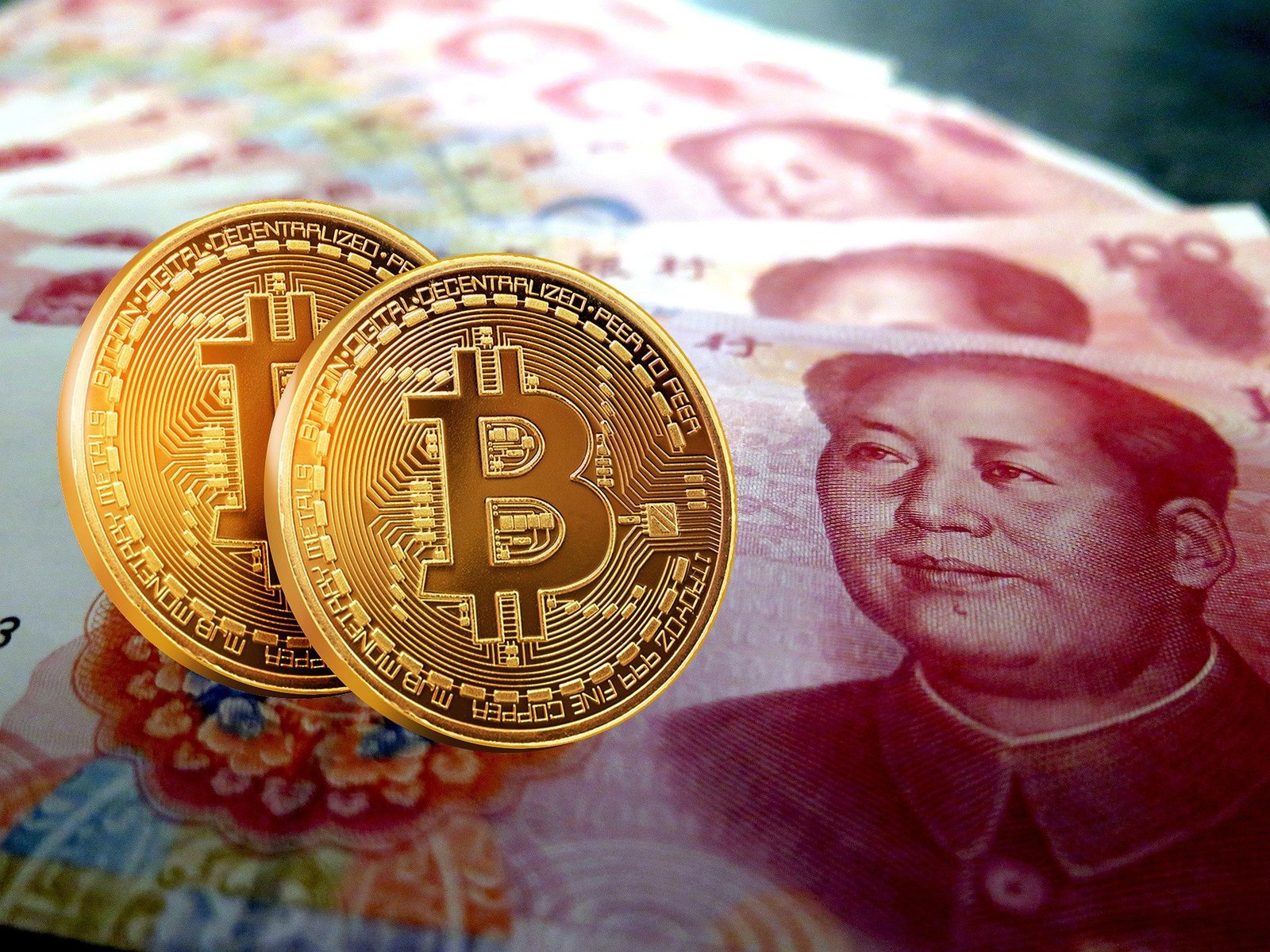
    This past Friday May 21st, 2021, Bitcoin and other cryptocurrencies crashed as a result of China’s statement that same day, cracking down on Bitcoin mining and trading of cryptocurrencies. Chinese Vice Premier Liu He and the State Council issued a statement citing concerns over the cryptocurrencies mining and trading risks to China’s national economy. The statement, which was released late Friday in China, said it is necessary to “crack down on Bitcoin mining and trading behavior, and resolutely prevent the transmission of individual risks to the social field.” Bitcoin’s price on Coin Metrics slid more than 8.5% as news of the statement circulated, part of a broader plunge that has seen the digital currency tumble more than 40% from its peak.

    Additionally, China’s rhetoric on Bitcoin comes just a day after U.S. officials pledged to get tough on those using bitcoin to conduct “illegal activity broadly including tax evasion.” Following that announcement, the Treasury Department said it will require reporting on crypto transfers of more than $10,000, just as with cash (Jeff Cox, CNBC).

    But the concerns specifically in China stemmed from a number of issues, surprisingly the number one likely being related to energy. Much of bitcoin mining is done there by computer that use massive amounts of energy to solve complex math problems to unlock the cryptocurrency. Additionally, those same Chinese financial authorities raised similar concerns to the Treasury Department, regarding the use of the cryptocurrency as a mechanism to make money in illicit ways. Their statement went on to say, “It is necessary to maintain the smooth operation of the stock, debt, and foreign exchange markets, severely crack down on illegal securities activities, and severely punish illegal financial activities”. However, it’s important to note, as part of an effort to enter the booming digital currency space, China’s central bank has been one of the first in the world to develop its own digital currency backed by the yuan.

  • Home Prices Continue to Soar, Are We Headed for Another Housing Market Bubble?

    Nearly all experts predict we are not. Here’s Frank Martell, President, and CEO of CoreLogic.

    With prospective buyers continuing to be motivated by historically low mortgage rates, we anticipate sustained demand in the summer and early fall…

    Additionally, housing market investors don’t perceive there to be many similarities to the 2008 housing market crash. The bottom line is no one has any real concerns about a sudden drop in prices as home price statistics, provided by Forbes, show consistent month-to-month increases in prices.

    Greg McBride, the chief financial analyst at Bankrate.com, told Forbes that although home prices are climbing, any perceived similarities to the housing bubble and crash of 2006-2008 are yet premature:

    The [current] rise in prices is a byproduct of a severe imbalance between supply and demand, not the ‘loosey, goosey,’ anything-goes lending that so was so prevalent in the [2006-2008] housing bubble

    McBride also points out that, unlike the 2006-2008 period, lending standards have greatly tightened. Banks are now only lending to the most creditworthy mortgage customers, suggesting a price crash is probably not in the cards. But McBride warns that if lending standards loosen again and “we see the [excessive lending] practices we saw from 2004-2006, then all bets are off.”

    Frank Nothaft, the chief economist for CoreLogic, told Forbes that subprime borrowers are now “largely absent” from the mortgage market. The subprime borrowers were partly to blame for the prior housing meltdown. The list of experts with similar beliefs that the housing crash is not imminent is extremely long. They don’t believe there is anything close to a repeat of 2008 in the near future. Only time will tell.

  • Did the Economic Slowdown (as a Result of COVID-19) Actually Impact CRE Positively?

    Did the Economic Slowdown (as a Result of COVID-19) Actually Impact CRE Positively?

    Succinctly, of course not. However, one may argue that the COVID-19 pandemic did create an opportunity for the CRE (Commercial Real Estate) market to generate innovative opportunities for at least this coming year. Some of the opportunities are lessons carried from 2020, when we saw CRE begin to show signs of gradual recovery before returning [Forbes Real Estate Council]. John D’Angelo, Deloitte Consulting’s U.S. Real Estate Leader agreed that at least a few emerging CRE trends will contribute to a recovery in 2021.

    Firstly, global CRE Corporations are researching how to attack the following:

    • Continuously evolving behavioral trends post COVID-19
    • Establishing more secure building spaces
    • Optimal efficiency
    • Improving in recognizing challenges, vulnerabilities, and risks at the early portfolio level

    CRE Corporations especially should be working extra hard to familiarize themselves with the results of this research as these are important trends that will likely impact the CRE market as a whole. Those who understand these trends will be able to provide their clients a better experience with access to this knowledge and, therefore, result in steady sales.

    Secondly (and in fact surprisingly), due to the pandemic, lockdowns have led more companies to have their employees working from home. While it may seem like there would be no use for office space in 2021, there are actually several opportunities in the CRE market for commercial offices that were not there before. Vacancies in high-traffic areas make this the perfect time for commercial owners who are looking to expand.

    While many businesses are still waiting to bring their employees back to the office, there are undoubtedly several good reasons for having an office in a post-COVID environment. In an office, employees have more space to work collaboratively, increasing cooperation and efficiency. CRE owners and investors would be wise to acknowledge the fact that even during the pandemic, there are still business owners out there looking for affordable office space and certainly have this in mind as they make their investment decisions this year.

    Finally, when it comes to e-commerce, an already growing sector prior to 2020, boomed during the pandemic [Forbes Real Estate Council]. In response, retail stores and third-party logistics businesses are not only growing or optimizing their fulfillment center footprints, but many of them are also switching from a “just-in-time” inventory model, to a “just-in-case” approach as they aim to prevent the shortages of goods encountered throughout 2020. As this trend continues, many online shops nationwide will need to lease a warehouse for their growing businesses. This will certainly lead to a steady increase in leasing opportunities in the CRE market that both owners and investors should take advantage of.