Tag: commercial real estate

  • Considerations for CRE Investing

    Have you thought about the first thing you notice when you shop for an item? It is very likely that you look for the price tag. We look for the price tag even if money is not a concern. Let us suggest a mental exercise. Please think about an investment (any) and take note of the first few things that come to your mind.

    Many of us will think of profit first i.e. how much money will we make off the investment? After all, isn’t that the purpose of investing? Here’s where investors differ in their sophistication. When it comes to real estate investing, price or valuation is an important factor, but not the only factor. Outside of valuation, there are four key factors that are key to real estate investing: Time horizon, Liquidity, Risk Tolerance, and Property Type. We’ll get into each one of these in detail.

    Time Horizon and Liquidity

    What is your time horizon to invest? Are you looking for monthly returns or can you wait for years or decades as you build your retirement money? If you’re looking for monthly or quarterly returns you can get it from dividend yielding REITs or stabilized assets that provide monthly cash flow from operations that can be distributed to investors.

    Would you be dipping into the investments for emergencies? Many real estate investments are illiquid in that it may take months or years to get out of the investment. For e.g. if you’re investing in a private real estate fund or syndication it is likely that you’d have to hold the investment for 3-7 years. You do have some options, limited though, if you’d like the RE investments to be liquid. For e.g.  Publicly traded REIT securities.

    Location, Location, Location

    Your are sure to have this common refrain in residential real estate that it is all about the location. This is true across the entire asset class and the location will determine the risk, price and quality of assets. The key differentiator for an investor is to identify the next hot location rather than the ones already popular. That is how an investor will make money by betting on new up and coming locations.

    Property Types

    Property types have different risk/reward profiles and hence it is important to understand and appreciate the property type in question. It is key to understand the different types of property types, not to just understand the lay of the land, but also to form your investing approach and nail down the basics. The following chart from NAREIT captures the different property types. The major property types are Multi-family, Office, Retail, Health Care, Specialty, Hospitality, and Industrial.
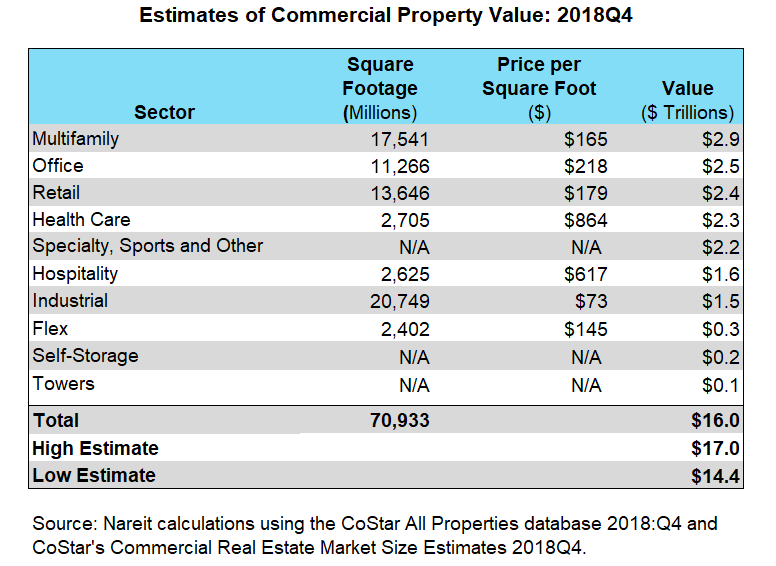
    It is common to start with one property type, learn the basics, and then add other property types to diversify. Many of the CRE concepts are applicable to all property types and each property type will have its specialization, differentiators or nuances. We will start seeing that there are many similarities, but there are also differences across property types. The key investment criteria is that they will have different risk profiles that the investor needs to understand. Multifamily has a different risk profile than Office, with different factors affecting the rent and prices. Commensurate with the risk, the investment rewards will also be different across property types.

    Risk tolerance

    We have discussed risk tolerance in prior posts as risk/reward is the bedrock of investing. Your tolerance of risk is going to make or break many investment decisions to see if you get to enjoy it or regret it. Combined with the above factors, like low liquidity, one bad investment can make you suffer for months or years. There is no stop loss on real estate like stocks.

    The property type will dictate the risk, IRR, cap rate etc. and determine your returns and hence it is very important. For e.g. you may have heard about the retail “apocalypse” in all of main stream media and intuitively understand that retail property type is working through some issues. At the same time, you may have heard about the affordability crisis in many cities and may understand that there is not enough supply of houses.

    Quality of Assets

    A given asset in a property type can be further sub-categorized and the category may have its own nuances. You may have heard class A, B or C for multi-families. In general,

    • Class A – Newer properties in desirable “hot” locations. Rents are the highest and therefore prices are the highest.
    • Class B – Middle of the road properties, usually more than 20 years old, in solid locations. Rents are middle range and hence prices are also similar.
    • Class C – Older properties in neighborhoods, may not be in great condition and less desirable than Class B locations. Rents are the lowest and prices are also the lowest.

    It is important for investors because as mentioned in the description, risk, rent, price and returns vary by the class of property in big ways.

    Takeaways

    Even within the asset class of Commercial Real Estate, an investor has multiple considerations to evaluate risk and do the due diligence. Some are common across the entire asset class and some are different across the property types within the CRE asset class. The common key considerations are the long time horizons and illiquid nature of the asset. The other considerations are risk tolerance for each property type and the quality of assets within the property type.
  • Considerations for CRE Investing

    Have you thought about the first thing you notice when you shop for an item? It is very likely that you look for the price tag. We look for the price tag even if money is not a concern. Let us suggest a mental exercise. Please think about an investment (any) and take note of the first few things that come to your mind.

    Many of us will think of profit first i.e. how much money will we make off the investment? After all, isn’t that the purpose of investing? Here’s where investors differ in their sophistication. When it comes to real estate investing, price or valuation is an important factor, but not the only factor. Outside of valuation, there are four key factors that are key to real estate investing: Time horizon, Liquidity, Risk Tolerance, and Property Type. We’ll get into each one of these in detail.

    Time Horizon and Liquidity

    What is your time horizon to invest? Are you looking for monthly returns or can you wait for years or decades as you build your retirement money? If you’re looking for monthly or quarterly returns you can get it from dividend yielding REITs or stabilized assets that provide monthly cash flow from operations that can be distributed to investors.

    Would you be dipping into the investments for emergencies? Many real estate investments are illiquid in that it may take months or years to get out of the investment. For e.g. if you’re investing in a private real estate fund or syndication it is likely that you’d have to hold the investment for 3-7 years. You do have some options, limited though, if you’d like the RE investments to be liquid. For e.g.  Publicly traded REIT securities.

    Location, Location, Location

    Your are sure to have this common refrain in residential real estate that it is all about the location. This is true across the entire asset class and the location will determine the risk, price and quality of assets. The key differentiator for an investor is to identify the next hot location rather than the ones already popular. That is how an investor will make money by betting on new up and coming locations.

    Property Types

    Property types have different risk/reward profiles and hence it is important to understand and appreciate the property type in question. It is key to understand the different types of property types, not to just understand the lay of the land, but also to form your investing approach and nail down the basics. The following chart from NAREIT captures the different property types. The major property types are Multi-family, Office, Retail, Health Care, Specialty, Hospitality, and Industrial.

    It is common to start with one property type, learn the basics, and then add other property types to diversify. Many of the CRE concepts are applicable to all property types and each property type will have its specialization, differentiators or nuances. We will start seeing that there are many similarities, but there are also differences across property types. The key investment criteria is that they will have different risk profiles that the investor needs to understand. Multifamily has a different risk profile than Office, with different factors affecting the rent and prices. Commensurate with the risk, the investment rewards will also be different across property types.

    Risk tolerance

    We have discussed risk tolerance in prior posts as risk/reward is the bedrock of investing. Your tolerance of risk is going to make or break many investment decisions to see if you get to enjoy it or regret it. Combined with the above factors, like low liquidity, one bad investment can make you suffer for months or years. There is no stop loss on real estate like stocks.

    The property type will dictate the risk, IRR, cap rate etc. and determine your returns and hence it is very important. For e.g. you may have heard about the retail “apocalypse” in all of main stream media and intuitively understand that retail property type is working through some issues. At the same time, you may have heard about the affordability crisis in many cities and may understand that there is not enough supply of houses.

    Quality of Assets

    A given asset in a property type can be further sub-categorized and the category may have its own nuances. You may have heard class A, B or C for multi-families. In general,

    • Class A – Newer properties in desirable “hot” locations. Rents are the highest and therefore prices are the highest.
    • Class B – Middle of the road properties, usually more than 20 years old, in solid locations. Rents are middle range and hence prices are also similar.
    • Class C – Older properties in neighborhoods, may not be in great condition and less desirable than Class B locations. Rents are the lowest and prices are also the lowest.

    It is important for investors because as mentioned in the description, risk, rent, price and returns vary by the class of property in big ways.

    Takeaways

    Even within the asset class of Commercial Real Estate, an investor has multiple considerations to evaluate risk and do the due diligence. Some are common across the entire asset class and some are different across the property types within the CRE asset class. The common key considerations are the long time horizons and illiquid nature of the asset. The other considerations are risk tolerance for each property type and the quality of assets within the property type.
  • Why NOT to invest in Commercial Real Estate?

    Why NOT to invest in Commercial Real Estate?

    We’ve seen the reasons to invest in Commercial Real Estate (CRE) in a previous article. Though we believe that every investor should have access to Commercial Real Estate as an asset class, it may not be a good asset class to invest in for some investors due to certain characteristics of the real estate asset class. The purpose of this article is to go through the major reasons NOT to invest in real estate. This way an investor can evaluate for herself the pros and cons of investing in real estate and make an informed decision about real estate investing.

    Long term horizon and illiquid

    First and foremost, Real Estate is the least liquid of the major asset classes i.e. you may not be able to take out your money immediately when you need it. This applies to real estate private equity, syndicates, or investing directly in the assets (not through REITs). You could sell your stocks or bonds and cash it in a matter of hours, in real estate it will take months.

    Real Estate also has evolved over the decades and the liquidity problem is solved by public REITs. REITs maybe an ideal vehicle for investors who want to invest in real estate, but want liquidity. REITs behave like securities and hence investors can buy and sell like any of their favorite stocks. REITs in turn have to buy and sell capital and illiquid assets which may take months.

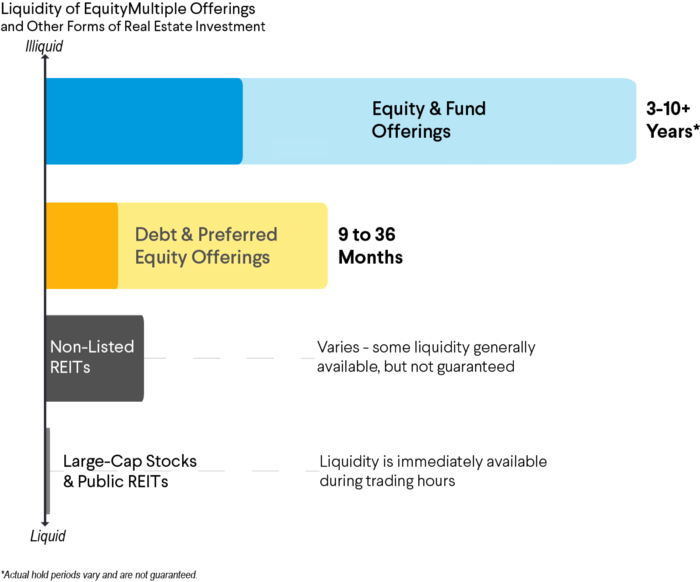
    Source: https://equitymultiple.medium.com/illiquid-assets-an-introduction-eede56c1e947

    The above chart from EquityMultiple real estate platform goes into the various offerings and the liquidity aspect. If an investor doesn’t have the appetite for the long-term and illiquid nature of the real estate, it is best to think of alternatives.

    Capital intensive

    Real Estate, by definition, is capital intensive. Though real estate can use leverage, an investor may still need to layout significant capital for many real estate types. Here are the top three CRE sales in NYC in 2020 to give an idea of the capital-intensive nature of CRE:

    424 Fifth Avenue | $978 million
    Buyer: Amazon
    Seller: WeWork, Rhône Group
    Brokerage: N/A

    410 Tenth Avenue | $952.5 million
    Buyer: 601W Companies
    Seller: SL Green Realty
    Brokerage: CBRE

    330 Madison Avenue | $900 million
    Buyer: Munich RE
    Seller: Abu Dhabi Investment Authority
    Brokerage: CBRE

    Source: The Real Deal

    All of us will agree that raising $978 million is no small capital raise even for large institutions though there will be multiple sources of capital including debt. There are options for investors to invest in real estate without a large capital commitment (e.g. REITs), but we need to keep in mind that real estate projects and assets are very capital intensive directly or indirectly.

    Risk tolerance and scars from global financial crisis

    The first rule of investment is don’t lose money. And the second rule of investment is don’t forget the first rule. And that’s all the rules there are.

    Warren Buffett

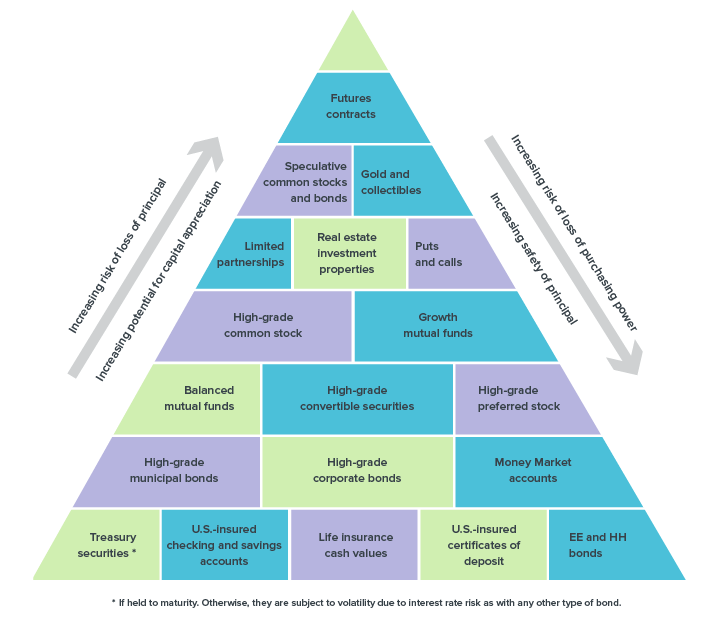
    Is real estate a good investment for a risk-averse person? All asset classes have varying levels of risk, but let us address real estate in this article when compared to other asset classes. The chart below from Smart About Money illustrates the risk of loss of principal and increasing potential for capital appreciation in the chart below.

    Source: Smart About Money Determining Your Risk Tolerance

    There can be a wide variety of risk level within the real estate property types and deals, but real estate as an asset class falls somewhere in the middle of the risk spectrum i.e. there is a probability that you could lose your entire money and even more. For e.g. you could lose your equity money and a lot more if you’ve provided a loan guarantee and the deal goes way south.

    The residential Real Estate sector was a trigger for the Global Financial Crisis and it affected millions of people. People who remember it well may not have a good association with real estate and may have developed a risk-aversion. If you’re one such individual, there is a lot of preparation and groundwork that needs to be done even before you invest your $ in real estate.

    Investor Takeaways

    This article is the yin to the yang of ‘Why bother to invest in Commercial Real Estate?” We’ve looked into three major reasons NOT to invest in real estate. First, the illiquid nature of real estate for private placements and direct holding of assets. Second, the capital intensive nature of real estate outside of REITs. Third, is the relatively higher risk tolerance needed for investors compared to some other asset classes. It is best for an investor to consider their financial situation, understand the risks involved before proceeding (or not) with investing in real estate.