Tag: cre investor tips

  • The United States NO LONGER Leads the World in CRE Investing

    It’s been covered extensively, but the COVID-19 pandemic has not been kind to CRE investment. Unfortunately, from looking at Real Capital Analytics CRE investment numbers for July 2021 and the general trajectory over a longer-term period, the CRE investing landscape in the US is not likely to change anytime soon (Clark, 2021). That considers far more than the decline in CRE investment we witnessed during the COVID-19 pandemic. It largely considers the reality that the world’s leading financial giants are contemplating a permanent hybrid work schedule. Real estate still continued to dominate as an investor-friendly asset class, in fact the largest in the world. However there’s no doubt CRE subsector investment dropped significantly and is continuing to, as a result of the pandemic. 

    How the US Fell Behind in CRE Investment

    When the COVID-19 pandemic created a recessionary period March 2020 for the United States economy, the EU began flourishing. According to the same Real Capital Analytics report, “US investment volume for deals priced $10 million and greater slipped behind those in Europe by $19 billion” (Clark, 2021). Unfortunately for the US economy, this occurred in simultaneous months. As soon as the EU began to pick up momentum in deals, they grew quicker and larger. The United States economy – largely attributed to government political infighting – was placed on the back burner at that time. Then President Trump was in the heat of his re-election celebrations, until a global pandemic that’s been pegged as worse than the Spanish Flu, came around (Cox, USA Today).

    This understandably sidetracked the Trump administration into both shock and damage control. While lawmakers in the United States were looking for who to blame for the pandemic’s “miss”, a Brookings University study concluded other countries were busy seizing on the opportunity to attract new business. Predominantly African countries, but definitely also many of those previously really hurting in the EU. 

    Jim Costello, Senior Vice President at Real Capital Analytics, described how investors are facing greater uncertainty around “underwriting future income trends for a property” because of the then relatively novel coronavirus.

    “The social safety nets of European countries can look more expensive, but in a time of crisis, they can also help investors understand how economic losses will be distributed. A single large entity-level transaction boosted quarterly European deal activity ahead of that of the US in late 2017, but otherwise the U.S. has been a larger investment market.”

    – Jim Costello, Real Capital Analytics

    Where CRE Investment in the US Currently Stands and the Outlook Moving Forward

    It’s worth noting the report states that in under normal circumstances, the US is the world’s “most liquid region” for commercial real estate activity. However, in the second quarter of the 2020, Europe moved past the US as a “hub for investment” (Clark, 2021). The trend is yet to discontinue. As CRE investing, raising capital through debt issuances, crowdfunding, and other methods of obtaining credit for CRE projects are rapidly declining, investor confidence is dropping in parallel. While data hasn’t favored bullish CRE investors since the onset of COVID-19, we’ve continued to cover hypothetical positive CRE resurgences.

    Nearing the conclusion of Jim Costello’s findings, different calculations tell the same story. Commercial real estate holdings in the US are not the most advisable investment presently (Costello, 2021). The early figures for July show a double-digit decline in the number of commercial real estate deals in the US. However, deal volume for July is projected to be more than $10 billion. In 2009 – the last officially recorded recession – deal activity averaged around $6 billion per month for the whole year and was closer to $5 billion for July (Costello, 2021).

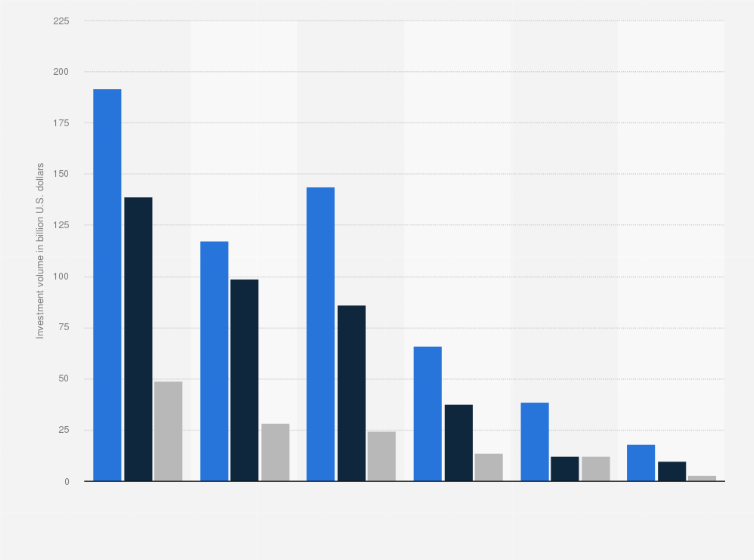
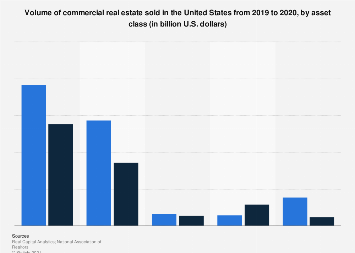
    The findings Jim Costello referred to align with data collected by Statista, a well-known statistics portal for large market data.

    Figure 1 – Commercial Real Estate Investment Volume in US, 2019-2020 ($B of USD)
    Source: Statista Consumer Data, 2021
    Figure 2 – Totaled Values of Commercial Real Estate Sold in US, 2019-2020 ($B of USA)
    Source: Statista Consumer Data, 2021

    “So while conditions in the US are poor, as of yet, investment activity is not as bad as the last downturn, the commercial real estate data suggests that there is less confidence in the US at the moment.”

    – Jim Costello, Real Capital Analytics

    Those final words from Jim Costello in this piece concisely summarize the point we’ve been driving home. While you may not agree with Jim’s rationale, the data does not lie. CRE investments in the US have been going downward since the start of COVID-19 and furthermore, the vast majority of reputable real estate financial analysts would not agree CRE is the best real estate vehicle to invest in at this time, at least relatively passively. It’s perhaps most important to conclude by reminding investors of the 2008 recession, ultimately collapsing from a massive residential housing market bubble. The lessons of 2008 not only taught investors, but also regulators to be vigilant of potential bubbles with systemic risks. However in this case, all the experts suggest the “crash” of US CRE investing during COVID-19 had to do with consumer confidence.

    Once it began to fall, CRE investing opportunities essentially bottomed out because investors ran to relocate their assets. From placing investments much more frequently in REITS and other well diversified real estate vehicles, direct CRE investors became harder and harder to come by. When you add hybrid work schedules, to a push for more productive work-at-home time, and bottom line cost cuts from closing down “brick-and-mortar” offices, at best, the uncertainty of the delta variant in the COVID-19 virus is continuing to hold back CRE investing in the US. At worst – or most likely – CRE investing in the US is, at least temporarily, does not appear to favor any realistic bullish outlook.

  • How the Green New Deal Would Impact Real Estate Investors

    Depending on your views on climate change, the Green New Deal framework will either conjure up enthusiasm, anxiety, or perhaps a combination of the two. The proposed bill, which has since been explained as a framework towards what we ought to work towards, calls for “maximum energy efficiency”. Based on scientific research, which concludes climate change is imminent and potentially disastrous, the proposal aims for net-zero emissions in the United States by 2050. As part of the plan to get there, this means every building in the country would need to be upgraded for maximal energy efficiency, water efficiency, safety, affordability, comfort, and durability.

    As of the start of 2020, approximately 40% of the United States’ carbon monoxide emissions come from either commercial or residential real estate buildings (Neiditch, Forbes). Many of the political proponents of the Green New Deal were pushing it behind the idea that up to $1 trillion of infrastructure and coastal real estate could be damaged by global warming by 2050. According to the Energy Information Administration (EIA), currently, there are approximately 5.6 million commercial real estate buildings in the United States. Specifically in New York City, as part of an ongoing effort to combat climate change, legislation was passed to force buildings that are larger than 25,000 square feet to make energy efficient alterations. The legislation mandates cutting down greenhouse gas emissions 40% by 2030 and 80% by 2050. While the parameters for smaller, residential buildings aren’t as explicit, it’s estimated 95 million homes will be impacted and the cost to owners will be in excess of $400 billion (Neiditch, Forbes).

    While the Green New Deal did not come close to passing as it was originally written and there is unlikely to be sweeping legislation on a national level to overhaul climate change, many cities and states are finding a balance between clean air and economic productivity. Unfortunately, a lot of this conversation tends to be intertwined with politics, but the reality is a rural area in Kentucky (as an example) is not going to have the same availability of economic or human capital resources as a metropolis, like New York or Los Angeles. The lack of availability of these resources puts constraints on the ability of certain regions to advance their technological capabilities, thereby making the real estate investment opportunities unattractive to potential investors.

    Though preparations to meet the 2030 and 2050 targets have begun, there are some more immediate upgrades property owners can make that aren’t as long-term oriented, including switching out lightbulbs for “smart” lighting, upgrading HVAC systems, installing remote-controlled window shades, painting roofs with light-reflecting paint, planting trees, and installing photovoltaics. Additionally, preparation for weatherization is key to having a more energy efficient property. Windows, doors, and insulation can all be switched out and there is legislation to include different types of incentives for property owners to make these changes. Upgrading electric and plumbing systems, as well as installing solar panels can make homes more marketable, considering these changes are becoming more prevalent to the point of necessity. Finally, the Green New Deal framework focuses heavily on “green spaces” – or lawns – that cover more than 40 million acres of land in the United States. Lawns limit biodiversity and encourage pesticide usage and emissions from lawnmowers. The Green New Deal supporters encourage the conversion of these spaces to victory gardens and the expansion of green landscape architecture practices. An example of this is xeriscaping, or sustainable, easy-to-maintain landscaping first used in arid regions, which uses native plants and limits turf areas. This can reduce outdoor water use by as much as 50%, saving water as well as the environment (Neiditch, Forbes).

    So, what does the ambitious Green New Deal framework and the implications it will have on commercial and residential real estate mean for investors? Firstly, investors should focus on high-tech, climate-resilient opportunities in the real estate market. Secondly, residential real estate owners who are not under pressure from legislators to make climate change friendly adjustments to their properties should do so anyway, otherwise they will be far less attractive to prospective investors. Finally, commercial real estate investors, who are under pressure to begin implementing climate change measures mandated by signed legislation, are going to face major hurdles with regards to cost cutting. This legislation poses further challenges to commercial real estate investors, who are already in a difficult position coming out of the pandemic, in addition to facing the necessity to transform their assets to handle the push towards digital transformation. One thing is for sure: the conversation will continue. Being prepared for change is the best way to not only save the environment, but your long-term financial stability as well.

  • How the Green New Deal Would Impact Real Estate Investors

    Depending on your views on climate change, the Green New Deal framework will either conjure up enthusiasm, anxiety, or perhaps a combination of the two. The proposed bill, which has since been explained as a framework towards what we ought to work towards, calls for “maximum energy efficiency”. Based on scientific research, which concludes climate change is imminent and potentially disastrous, the proposal aims for net-zero emissions in the United States by 2050. As part of the plan to get there, this means every building in the country would need to be upgraded for maximal energy efficiency, water efficiency, safety, affordability, comfort, and durability.

    As of the start of 2020, approximately 40% of the United States’ carbon monoxide emissions come from either commercial or residential real estate buildings (Neiditch, Forbes). Many of the political proponents of the Green New Deal were pushing it behind the idea that up to $1 trillion of infrastructure and coastal real estate could be damaged by global warming by 2050. According to the Energy Information Administration (EIA), currently, there are approximately 5.6 million commercial real estate buildings in the United States. Specifically in New York City, as part of an ongoing effort to combat climate change, legislation was passed to force buildings that are larger than 25,000 square feet to make energy efficient alterations. The legislation mandates cutting down greenhouse gas emissions 40% by 2030 and 80% by 2050. While the parameters for smaller, residential buildings aren’t as explicit, it’s estimated 95 million homes will be impacted and the cost to owners will be in excess of $400 billion (Neiditch, Forbes).

    While the Green New Deal did not come close to passing as it was originally written and there is unlikely to be sweeping legislation on a national level to overhaul climate change, many cities and states are finding a balance between clean air and economic productivity. Unfortunately, a lot of this conversation tends to be intertwined with politics, but the reality is a rural area in Kentucky (as an example) is not going to have the same availability of economic or human capital resources as a metropolis, like New York or Los Angeles. The lack of availability of these resources puts constraints on the ability of certain regions to advance their technological capabilities, thereby making the real estate investment opportunities unattractive to potential investors.

    Though preparations to meet the 2030 and 2050 targets have begun, there are some more immediate upgrades property owners can make that aren’t as long-term oriented, including switching out lightbulbs for “smart” lighting, upgrading HVAC systems, installing remote-controlled window shades, painting roofs with light-reflecting paint, planting trees, and installing photovoltaics. Additionally, preparation for weatherization is key to having a more energy efficient property. Windows, doors, and insulation can all be switched out and there is legislation to include different types of incentives for property owners to make these changes. Upgrading electric and plumbing systems, as well as installing solar panels can make homes more marketable, considering these changes are becoming more prevalent to the point of necessity. Finally, the Green New Deal framework focuses heavily on “green spaces” – or lawns – that cover more than 40 million acres of land in the United States. Lawns limit biodiversity and encourage pesticide usage and emissions from lawnmowers. The Green New Deal supporters encourage the conversion of these spaces to victory gardens and the expansion of green landscape architecture practices. An example of this is xeriscaping, or sustainable, easy-to-maintain landscaping first used in arid regions, which uses native plants and limits turf areas. This can reduce outdoor water use by as much as 50%, saving water as well as the environment (Neiditch, Forbes).

    So, what does the ambitious Green New Deal framework and the implications it will have on commercial and residential real estate mean for investors? Firstly, investors should focus on high-tech, climate-resilient opportunities in the real estate market. Secondly, residential real estate owners who are not under pressure from legislators to make climate change friendly adjustments to their properties should do so anyway, otherwise they will be far less attractive to prospective investors. Finally, commercial real estate investors, who are under pressure to begin implementing climate change measures mandated by signed legislation, are going to face major hurdles with regards to cost cutting. This legislation poses further challenges to commercial real estate investors, who are already in a difficult position coming out of the pandemic, in addition to facing the necessity to transform their assets to handle the push towards digital transformation. One thing is for sure: the conversation will continue. Being prepared for change is the best way to not only save the environment, but your long-term financial stability as well.

  • CRE PropTech: How Will it be Affected by the Aftermath of COVID-19

    COVID-19 will forever change the landscape of CRE (Commercial Real Estate), especially for firms who are used to operating almost exclusively in a brick and mortar, office environment. The aftermath of COVID-19 will almost undoubtedly include more “smart” CRE. To put it another way, as software like Zoom has become a household name – whereas prior to COVID-19 it was largely known to the white-collar working class – you can expect firms to invest less in physical property. Consequently, the data shows that in every sector, at least in the short-term, PropTech investment has slowed down (Abuelsamid, Forbes).

    Intuitively, successful long-term investors tend to be heavily data driven, which has been a big reason for the slowdown in PropTech. Investors within the real estate sector are exercising caution with regards to their portfolios, as well as towards new deals for CRE projects. A great deal of this is attributed to the initial concept of this piece (which Forbes agrees with): corporations and startup firms alike are showing an increased interest in technology, which allowed them to work “smart” (i.e. Zoom) despite the pandemic (Abuelsamid, Forbes). With decreased overhead being a large incentive for startups and pressure from shareholders to cut costs being a large incentive for big corporations, many are realizing that the way they were forced to do business is perhaps a more efficient way than they were prior to the COVID-19 pandemic.

    With that being said, as we mentioned in a previous piece, PropTech is still a relatively new field to most investors. The CRE investing subsector of PropTech is even smaller, so there’s definitely still plenty of opportunity for successful PropTech investment vehicles. Even with the current data showing there’s slowed growth in the PropTech CRE subsector, that’s not to say you shouldn’t keep an eye out for solid investment opportunities, as they are still out there and can definitely be lucrative. This is the main reason you’ll typically find seasoned, experienced investors in the CRE PropTech space. There is opportunity for large returns, but it is definitely slim.

    In the longer-term, there’s no reason right now to believe firms will switch back to investment in more physical property, especially when that money can be spent on human capital. Therefore, if you’re interested in PropTech investment strategies, you should not expect to see consistent positive performance from PropTech CRE investments. On the other hand – while this subject deserves a complete discussion on its own – residential PropTech is definitely on the rise (Aramati, Forbes). With a major push coming from cloud technologies and digital transformation, there’s a lot more investment in “smart” residential real estate as opposed to commercial real estate. Generally speaking, investments in “smart” technology have gained a tremendous amount of traction and thereby very large returns for earlier stage investors. Again, as we discussed in a previous article regarding PropTech, technological advancement is the future and investors who are looking for the next Amazon or Google in the real estate market ought to look into residential PropTech options with a more favorable outlook than commercial PropTech.

  • CRE PropTech: How Will it be Affected by the Aftermath of COVID-19

    COVID-19 will forever change the landscape of CRE (Commercial Real Estate), especially for firms who are used to operating almost exclusively in a brick and mortar, office environment. The aftermath of COVID-19 will almost undoubtedly include more “smart” CRE. To put it another way, as software like Zoom has become a household name – whereas prior to COVID-19 it was largely known to the white-collar working class – you can expect firms to invest less in physical property. Consequently, the data shows that in every sector, at least in the short-term, PropTech investment has slowed down (Abuelsamid, Forbes).

    Intuitively, successful long-term investors tend to be heavily data driven, which has been a big reason for the slowdown in PropTech. Investors within the real estate sector are exercising caution with regards to their portfolios, as well as towards new deals for CRE projects. A great deal of this is attributed to the initial concept of this piece (which Forbes agrees with): corporations and startup firms alike are showing an increased interest in technology, which allowed them to work “smart” (i.e. Zoom) despite the pandemic (Abuelsamid, Forbes). With decreased overhead being a large incentive for startups and pressure from shareholders to cut costs being a large incentive for big corporations, many are realizing that the way they were forced to do business is perhaps a more efficient way than they were prior to the COVID-19 pandemic.

    With that being said, as we mentioned in a previous piece, PropTech is still a relatively new field to most investors. The CRE investing subsector of PropTech is even smaller, so there’s definitely still plenty of opportunity for successful PropTech investment vehicles. Even with the current data showing there’s slowed growth in the PropTech CRE subsector, that’s not to say you shouldn’t keep an eye out for solid investment opportunities, as they are still out there and can definitely be lucrative. This is the main reason you’ll typically find seasoned, experienced investors in the CRE PropTech space. There is opportunity for large returns, but it is definitely slim.

    In the longer-term, there’s no reason right now to believe firms will switch back to investment in more physical property, especially when that money can be spent on human capital. Therefore, if you’re interested in PropTech investment strategies, you should not expect to see consistent positive performance from PropTech CRE investments. On the other hand – while this subject deserves a complete discussion on its own – residential PropTech is definitely on the rise (Aramati, Forbes). With a major push coming from cloud technologies and digital transformation, there’s a lot more investment in “smart” residential real estate as opposed to commercial real estate. Generally speaking, investments in “smart” technology have gained a tremendous amount of traction and thereby very large returns for earlier stage investors. Again, as we discussed in a previous article regarding PropTech, technological advancement is the future and investors who are looking for the next Amazon or Google in the real estate market ought to look into residential PropTech options with a more favorable outlook than commercial PropTech.