Tag: real estate

  • Why NOT to invest in Commercial Real Estate?

    Why NOT to invest in Commercial Real Estate?

    We’ve seen the reasons to invest in Commercial Real Estate (CRE) in a previous article. Though we believe that every investor should have access to Commercial Real Estate as an asset class, it may not be a good asset class to invest in for some investors due to certain characteristics of the real estate asset class. The purpose of this article is to go through the major reasons NOT to invest in real estate. This way an investor can evaluate for herself the pros and cons of investing in real estate and make an informed decision about real estate investing.

    Long term horizon and illiquid

    First and foremost, Real Estate is the least liquid of the major asset classes i.e. you may not be able to take out your money immediately when you need it. This applies to real estate private equity, syndicates, or investing directly in the assets (not through REITs). You could sell your stocks or bonds and cash it in a matter of hours, in real estate it will take months.

    Real Estate also has evolved over the decades and the liquidity problem is solved by public REITs. REITs maybe an ideal vehicle for investors who want to invest in real estate, but want liquidity. REITs behave like securities and hence investors can buy and sell like any of their favorite stocks. REITs in turn have to buy and sell capital and illiquid assets which may take months.
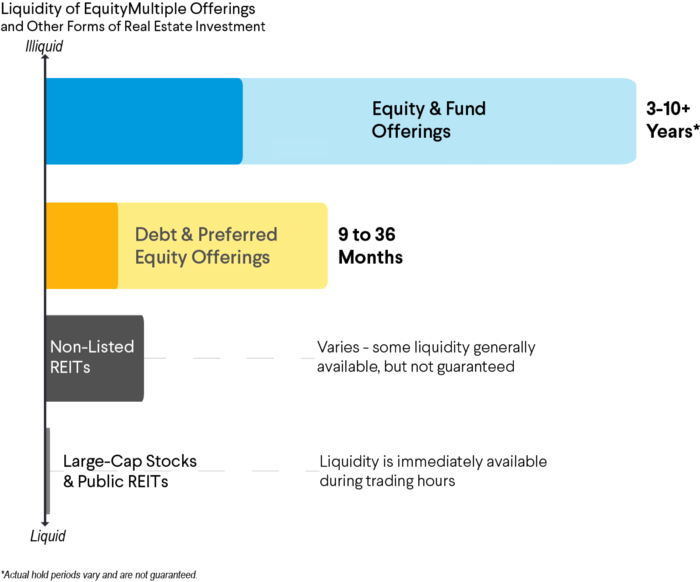
    Source: https://equitymultiple.medium.com/illiquid-assets-an-introduction-eede56c1e947

    The above chart from EquityMultiple real estate platform goes into the various offerings and the liquidity aspect. If an investor doesn’t have the appetite for the long-term and illiquid nature of the real estate, it is best to think of alternatives.

    Capital intensive

    Real Estate, by definition, is capital intensive. Though real estate can use leverage, an investor may still need to layout significant capital for many real estate types. Here are the top three CRE sales in NYC in 2020 to give an idea of the capital-intensive nature of CRE:

    424 Fifth Avenue | $978 million
    Buyer: Amazon
    Seller: WeWork, Rhône Group
    Brokerage: N/A

    410 Tenth Avenue | $952.5 million
    Buyer: 601W Companies
    Seller: SL Green Realty
    Brokerage: CBRE

    330 Madison Avenue | $900 million
    Buyer: Munich RE
    Seller: Abu Dhabi Investment Authority
    Brokerage: CBRE

    Source: The Real Deal

    All of us will agree that raising $978 million is no small capital raise even for large institutions though there will be multiple sources of capital including debt. There are options for investors to invest in real estate without a large capital commitment (e.g. REITs), but we need to keep in mind that real estate projects and assets are very capital intensive directly or indirectly.

    Risk tolerance and scars from global financial crisis

    The first rule of investment is don’t lose money. And the second rule of investment is don’t forget the first rule. And that’s all the rules there are.

    Warren Buffett

    Is real estate a good investment for a risk-averse person? All asset classes have varying levels of risk, but let us address real estate in this article when compared to other asset classes. The chart below from Smart About Money illustrates the risk of loss of principal and increasing potential for capital appreciation in the chart below.
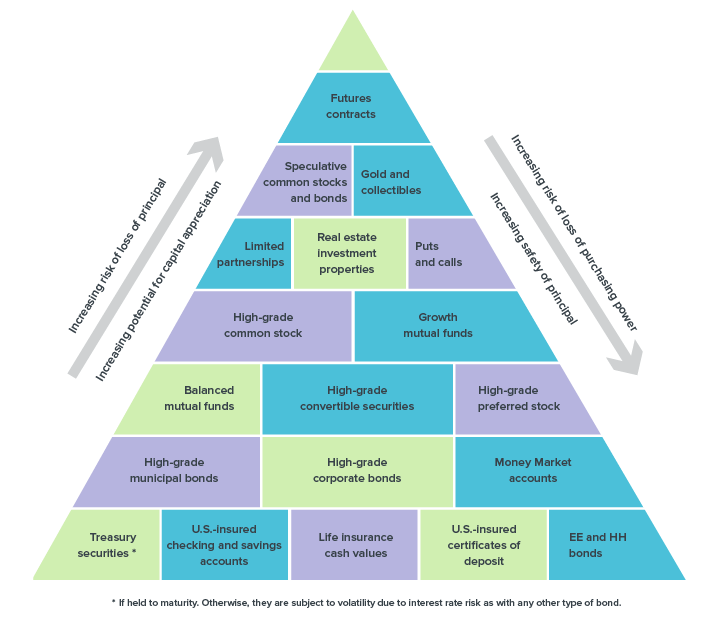
    Source: Smart About Money Determining Your Risk Tolerance

    There can be a wide variety of risk level within the real estate property types and deals, but real estate as an asset class falls somewhere in the middle of the risk spectrum i.e. there is a probability that you could lose your entire money and even more. For e.g. you could lose your equity money and a lot more if you’ve provided a loan guarantee and the deal goes way south.

    The residential Real Estate sector was a trigger for the Global Financial Crisis and it affected millions of people. People who remember it well may not have a good association with real estate and may have developed a risk-aversion. If you’re one such individual, there is a lot of preparation and groundwork that needs to be done even before you invest your $ in real estate.

    Investor Takeaways

    This article is the yin to the yang of ‘Why bother to invest in Commercial Real Estate?” We’ve looked into three major reasons NOT to invest in real estate. First, the illiquid nature of real estate for private placements and direct holding of assets. Second, the capital intensive nature of real estate outside of REITs. Third, is the relatively higher risk tolerance needed for investors compared to some other asset classes. It is best for an investor to consider their financial situation, understand the risks involved before proceeding (or not) with investing in real estate.

  • Why bother to invest in Commercial Real Estate?

    Investing in stocks or bonds has become so easy and widespread with advances in technology, with the likes of Robinhood. It also makes us wonder why invest in other asset classes like Commercial Real Estate (CRE) in the first place? In this article, we will attempt to answer this question. Along the way, we will also try to appreciate the risk profile and pros and cons of the three major asset classes – stocks, bonds, and real estate.

    As we look into the three major asset classes – stocks, bonds, and real estate – we will review the basis for portfolio diversification to manage risk. We will also look into the performance of the major asset classes in the past 15 years to see how they have performed relatively. Finally, we’ll see the relative tax and other advantages of the various asset classes as that will affect the bottom line to the investors.

    Portfolio diversification among asset classes

    You must have heard the oft-repeated phrase “don’t put all your eggs in one basket”. Though cliched, it is the idea behind portfolio diversification. In financial terms, the intent of portfolio diversification is to reduce overall volatility and enhance risk-adjusted returns. As we have seen in previous FinYork articles, investing is all about having an investment strategy in accordance with one’s risk tolerance and executing on that strategy. Hence, portfolio diversification is a key tenet of investment strategy.

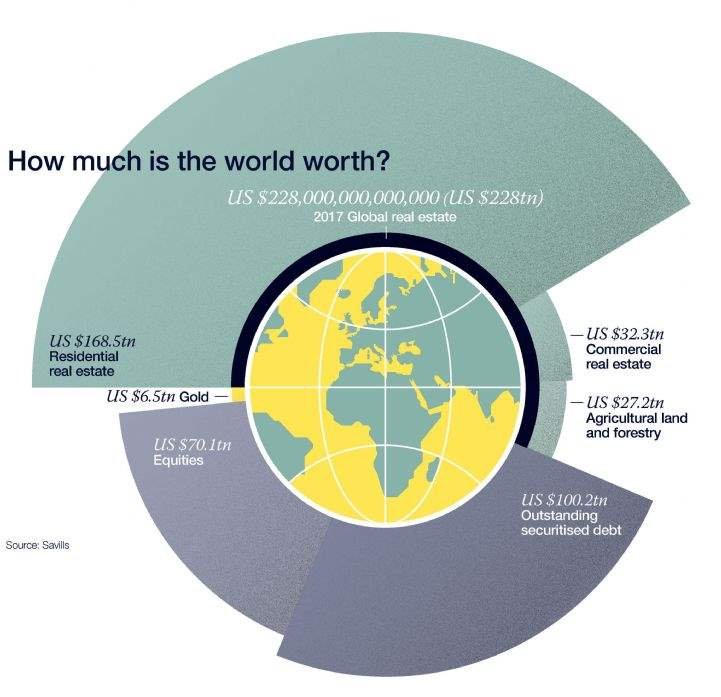
    Here’s a chart from Savills on how much the world is worth divided into various asset classes. Real estate refers to residential real estate and CRE market size is $32 Trillion. It comes after Debt (Bonds) and Equities (Stocks) and only growing. Essentially, CRE is a major asset class globally.

    How much is the world worth
    Source: Savills

    When added to a stock and bond portfolio, real estate can provide diversification benefits as real estate has historically shown a low correlation to stocks or bonds. There have been a couple of instances when all asset classes move together as in the Great Financial Crisis (GFC). Still, it is fair to say that the addition of real estate to a mixed-asset portfolio may lower overall volatility and enhance risk-adjusted returns.

    Real estate is likely the first asset class that we got exposed to whether it is to live, study, play, or work. Even if everything falls apart, humans need people need built space to sleep, live, and work. Simply put, humans cannot live without real estate. This provides a powerful argument for the longevity of the asset class and why a portfolio must have exposure to an asset class that meets the basic needs of humans.

    Long-term investment returns

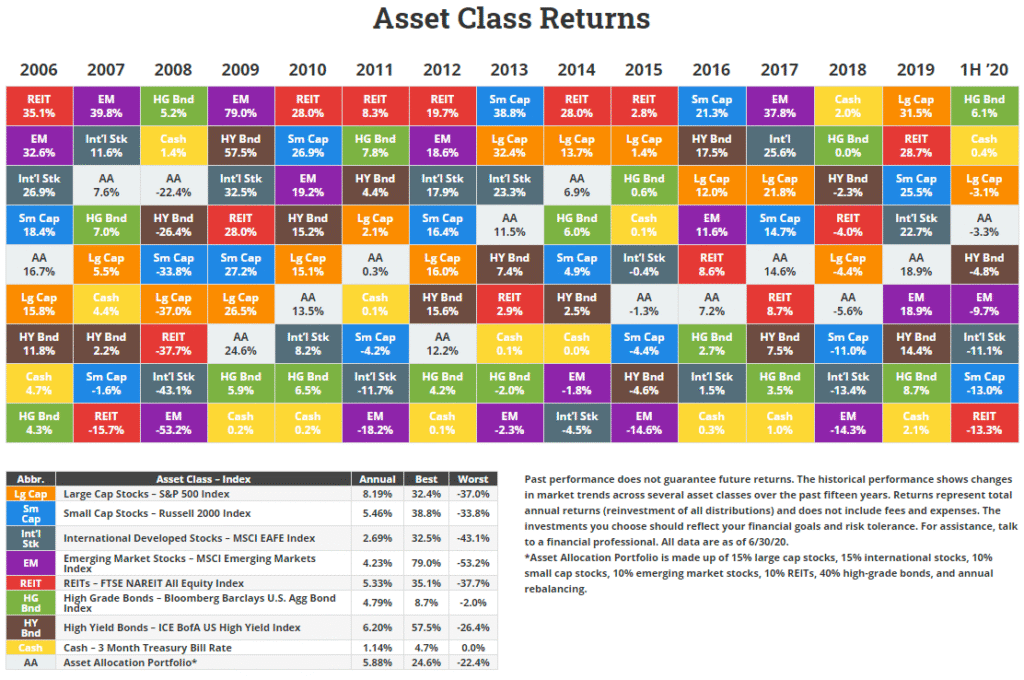
    As of Feb 2021, stock markets are at all-time highs even though it has not been a good year for certain real estate property types like retail or hotels. Let us rewind a bit and look at asset class returns over a longer period. We found the following chart from Novel Investor that compares asset class performance since 2006. As it turns out, REITs (real estate securities) came out on top the most in 6 of the 15 years tracked. Including the 2007-2008 great financial crisis (GFC), which was triggered by real estate, REITs have performed well.

    Asset Class Returns 
2006 
35.1% 
Int'l Stk 
Sm Cap 
16.7% 
Lg Cap 
HY end 
11.8% 
HG end 
4.3% 
Abbr. 
Int'l 
end 
2007 
Int'l Stk 
11.6% 
7.6% 
HG end 
Lg Cap 
Cash 
HY end 
Sm Cap 
-15.7% 
2008 
HG end 
1.4% 
-22.4% 
HY end 
Sm Cap 
Lg Cap 
Intl Stk 
-411% 
2009 
HY end 
57.5% 
Intl Stk 
Sm Cap 
Lg Cap 
HG end 
2010 
Sm Cap 
HY end 
Cap 
15.1% 
13.5% 
Int'l Stk 
8.2% 
HG end 
0.2% 
2011 
8.3% 
HG end 
HY end 
Cap 
2.1% 
0.3% 
Cash 
Sm Cap 
Intl Stk 
-11.7% 
-18.2% 
Annual 
8.19% 
5.46% 
2.69% 
4.23% 
5.33% 
4.79% 
6.20% 
1.14% 
5.88% 
2012 
19.7% 
Intl Stk 
17.9% 
Sm Cap 
Lg Cap 
HY end 
12.2% 
HG end 
0.1% 
2013 
Sm Cap 
Lg Cap 
Int'l Stk 
11.5% 
HY end 
7.4% 
HG end 
2014 
Lg Cap 
13.7% 
HG end 
Sm Cap 
HY end 
Intl Stk 
2015 
2.8% 
Lg Cap 
1.4% 
HG end 
Int'l Stk 
-0.4% 
Sm Cap 
HY end 
-14.6% 
2016 
Sm Cap 
21.3% 
HY end 
17.5% 
Lg Cap 
11.6% 
REIT 
7.2% 
HG end 
Stk 
1.5% 
2017 
Int'l 
25.6% 
Lg Cap 
21.8% 
Sm Cap 
14.6% 
REIT 
HY end 
3.5% 
2018 
Cash 
HG end 
HY end 
REIT 
Lg Cap 
Sm Cap 
-11.0% 
Int'l Stk 
-13.4% 
-143% 
2019 
Lg Cap 
31.5% 
REIT 
28.7% 
Sm Cap 
Int'l Stk 
22.7% 
18.9% 
18.9% 
HY end 
2.1% 
IH '20 
HG end 
6.1% 
Lg Cap 
-3.1% 
HY end 
Stk 
-11.1% 
Sm Cap 
-13.0% 
REIT 
-13.3% 
Asset Class - Index 
Large Cap Stocks - S&P 500 Index 
Small Cap Stocks - Russell 2000 Index 
International Developed Stocks - MSCI EAFE Index 
Emerging Market Stocks - MSCI Emerging Markets 
Index 
REITs - FTSE NAREIT All Equity Index 
Hi h Grade Bonds - Bloomberg Barclays U.S. Agg Bond 
In ex 
High Yield Bonds - ICE BofA US High Yield Index 
Cash -3 Month Treasury Bill Rate 
Asset Allocation Portfolio* 
Best 
32.4% 
38.8% 
32.5% 
79.0% 
35.1% 
8.7% 
57.5% 
4.7% 
24.6% 
Worst 
-37.0% 
-33.8% 
-43.1% 
-53.2% 
-37.7% 
-2.0% 
-26.4% 
0.0% 
-22.4% 
Past performance does not guarantee future returns. The historical performance shows changes 
in market trends across several asset classes over the past fifteen years. Returns represent total 
annual returns (reinvestment of all distributions) and does not include fees and expenses. The 
investments you choose should reflect your financial goals and risk tolerance. For assistance, talk 
to a financial professional. All data are as of 6/30/20. 
*Asset Allocation Portfolio is made up of 15% large cap stocks, 15% international stocks, 10% 
small cap stocks, 10% emerging market stocks, 10% REITs, 40% high-grade bonds, and annual 
rebalancing.
    Source: Novel investor Asset Class Returns

    Income Potential

    Real estate is in many ways different than a popular high-tech stock that may have doubled over a couple of years. For e.g. real estate offers investors relatively steady and recurring quarterly or monthly income that comes from operations. Many property types in real estate historically involved multi-year lease agreements (e.g. office leases) and hence the cash flow also tends to be relatively predictable and long-term in nature.

    On the other end, an investor may be getting zero returns in her savings accounts. Relatively speaking, real estate offers higher yields for such investors. When the cash and equivalents produce close to zero interests. A lot of people (e.g. retirees) need steady and stable cash flows.

    Inflation hedge and tax advantages

    The fourth benefit real estate provides – inflation hedge and tax advantages. This is very powerful because it can make a big difference to how much money you can actually pocket. Compared to other asset classes, CRE provides a level of inflation protection. How does it provide protection? Real estate leases for the most part incorporate rent increases based on inflation. You may be familiar with your annual house or office rent increase based on inflation. In addition, property values also appreciate based on input costs. If the cost of input like construction material or amenities increase due to inflation, so does the property price and value. The above also doesn’t take into account inflation i.e. it assumes the dollar value is the same in 2006 as it is in 2020. We know that a dollar can buy less of gas or milk than before.

    Investing directly in hard assets provides tax advantages in most countries. Tax policies favor real estate investing in many countries including the USA. For stocks and bonds, you’d have to pay taxes on interests, dividends, and capital gain. Depreciation and other treatment can lead to a paper loss when filing corporate or individual taxes. Hence, your tax burden may actually be very less. This deserves in-depth treatment and we will cover it in the future, but let us remember that many countries have historically provided very favorable treatment to the real estate sector.

    Investor takeaways

    We looked at the major asset classes and the role real estate can play in a portfolio to provide diversification. Real estate can help some investors meet their diversification strategy according to their risk tolerance. Looking at the long-term investment returns of various asset classes securities, Real Estate performance has actually been good in the long run. Scars of the Global Financial Crisis remain and COVID-19 will continue to be a challenge for many real estate property types.

    We also compared the asset classes using inflation and a tax lens. Of all the asset classes, real estate provides the most inflation hedge and tax advantages due to real estate advantageous tax policies in many countries.

    In summary, it may be worth investing in Real Estate as an asset class. We at FinYork believe all asset classes have a role to play in a portfolio, though we’ll be the first to admit we’re biased towards the real estate asset class. We also believe the real estate asset class is going to become more available and accessible to investors in the years to come. We want all investors to learn and benefit from this asset class. We plan to have a corresponding article on why NOT to invest in real estate. We encourage you to read both the articles and come to your own conclusions.