This past Friday May 21st, 2021, Bitcoin and other cryptocurrencies crashed as a result of China’s statement that same day, cracking down on Bitcoin mining and trading of cryptocurrencies. Chinese Vice Premier Liu He and the State Council issued a statement citing concerns over the cryptocurrencies mining and trading risks to China’s national economy. The statement, which was released late Friday in China, said it is necessary to “crack down on Bitcoin mining and trading behavior, and resolutely prevent the transmission of individual risks to the social field.” Bitcoin’s price on Coin Metrics slid more than 8.5% as news of the statement circulated, part of a broader plunge that has seen the digital currency tumble more than 40% from its peak.
Additionally, China’s rhetoric on Bitcoin comes just a day after U.S. officials pledged to get tough on those using bitcoin to conduct “illegal activity broadly including tax evasion.” Following that announcement, the Treasury Department said it will require reporting on crypto transfers of more than $10,000, just as with cash (Jeff Cox, CNBC).
But the concerns specifically in China stemmed from a number of issues, surprisingly the number one likely being related to energy. Much of bitcoin mining is done there by computer that use massive amounts of energy to solve complex math problems to unlock the cryptocurrency. Additionally, those same Chinese financial authorities raised similar concerns to the Treasury Department, regarding the use of the cryptocurrency as a mechanism to make money in illicit ways. Their statement went on to say, “It is necessary to maintain the smooth operation of the stock, debt, and foreign exchange markets, severely crack down on illegal securities activities, and severely punish illegal financial activities”. However, it’s important to note, as part of an effort to enter the booming digital currency space, China’s central bank has been one of the first in the world to develop its own digital currency backed by the yuan.
Succinctly, of course not. However, one may argue that the COVID-19 pandemic did create an opportunity for the CRE (Commercial Real Estate) market to generate innovative opportunities for at least this coming year. Some of the opportunities are lessons carried from 2020, when we saw CRE begin to show signs of gradual recovery before returning [Forbes Real Estate Council]. John D’Angelo, Deloitte Consulting’s U.S. Real Estate Leader agreed that at least a few emerging CRE trends will contribute to a recovery in 2021.
Firstly, global CRE Corporations are researching how to attack the following:
• Continuously evolving behavioral trends post COVID-19 • Establishing more secure building spaces • Optimal efficiency • Improving in recognizing challenges, vulnerabilities, and risks at the early portfolio level
CRE Corporations especially should be working extra hard to familiarize themselves with the results of this research as these are important trends that will likely impact the CRE market as a whole. Those who understand these trends will be able to provide their clients a better experience with access to this knowledge and, therefore, result in steady sales.
Secondly (and in fact surprisingly), due to the pandemic, lockdowns have led more companies to have their employees working from home. While it may seem like there would be no use for office space in 2021, there are actually several opportunities in the CRE market for commercial offices that were not there before. Vacancies in high-traffic areas make this the perfect time for commercial owners who are looking to expand.
While many businesses are still waiting to bring their employees back to the office, there are undoubtedly several good reasons for having an office in a post-COVID environment. In an office, employees have more space to work collaboratively, increasing cooperation and efficiency. CRE owners and investors would be wise to acknowledge the fact that even during the pandemic, there are still business owners out there looking for affordable office space and certainly have this in mind as they make their investment decisions this year.
Finally, when it comes to e-commerce, an already growing sector prior to 2020, boomed during the pandemic [Forbes Real Estate Council]. In response, retail stores and third-party logistics businesses are not only growing or optimizing their fulfillment center footprints, but many of them are also switching from a “just-in-time” inventory model, to a “just-in-case” approach as they aim to prevent the shortages of goods encountered throughout 2020. As this trend continues, many online shops nationwide will need to lease a warehouse for their growing businesses. This will certainly lead to a steady increase in leasing opportunities in the CRE market that both owners and investors should take advantage of.
Commercial Real Estate (CRE) Investor Question #91: How big is the real estate sector in S&P 500?
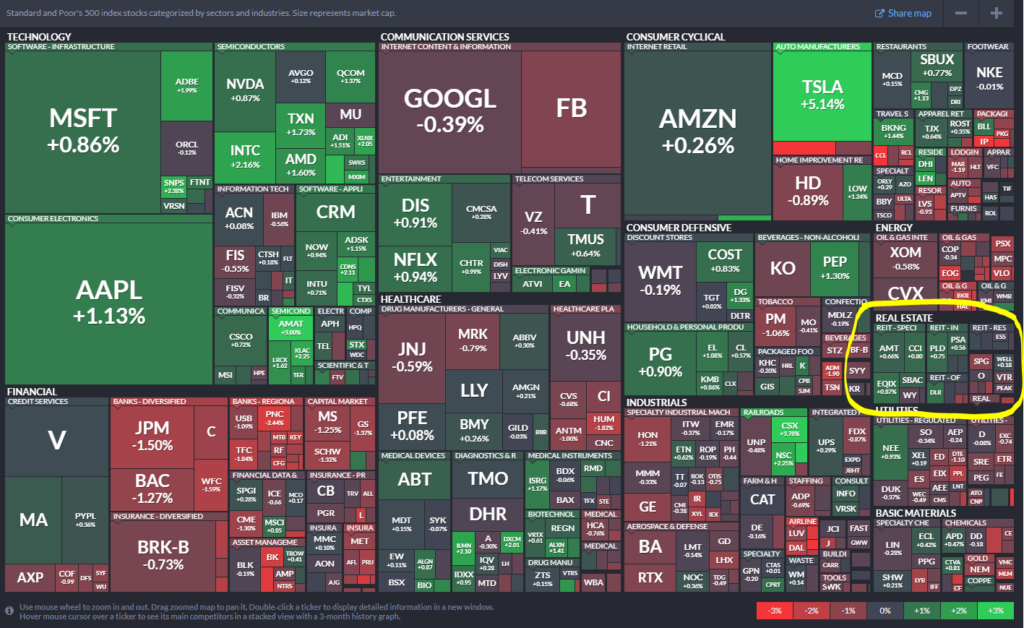
The following illustration gives an idea of the size of the real estate sector (circled in yellow) within the S&P 500. Going by market size, it is one of the smallest sectors in S&P 500 as of March 2021. Technology is the biggest sector. The real estate sector consists of REITs across multiple property types like Industrial, Multifamily, Office, etc.
Source: Finviz S&P 500 composition and the Real Estate sector
Demographics and in particular net migration plays an outsized role in Real Estate. In this article, we’ll look at the key factors affecting real estate and why net migration is a good indicator to follow for real estate investors.
We’ll delve into why net migration is actually a great indicator for the top states, counties, and towns to invest in. We’ll look at some migration reports from 2020 and see if they can form the basis of some investment ideas in 2021 and beyond.
Key Pillars of Real Estate Investing
Real Estate business and investing is impacted by multiple factors, but we can group them into three major categories:
Demographics
Population Growth, Urbanization/Sub-urbanization, and Migration
Employment Growth
Income/Cost of living
Economic
Supply & Demand
Infrastructure – Technology / Transportation
Fiscal and monetary policies (for e.g. interest rates)
Incentives
Affordable housing policies
Tax and Federal housing incentives
State and local incentives and policies
For an individual investor, keeping track of the above can be overwhelming though some of the policies and economics may remain the same over years or even decades. Still, it is a stretch for individual investors. In this article, we’ll focus on demographics and see if net migration can be a proxy (or close to a proxy) to find states or cities to invest in.
Demographics and demographic trends
Our focus will be on demographics and in particular net migration in this article. Why is demographics a key pillar and why should we focus on that? Because demographics is all about the consumers i.e. tenants. One can have the best economic climate and the greatest policies, but at the end of the day a customer has to rent real estate and that is driven by demographics makeup. First, let us see the definition of demographics.
Demographics are the data that describes the composition of a population, such as age, race, gender, income, migration patterns, and population growth. These statistics are an often overlooked but significant factor that affects how real estate is priced and what types of properties are in demand
A customer (i.e. tenant) has to rent real estate in a given location and demographics is all about the customers. Investors should look at demographics at a given point of time as well as over a period of time (i.e. trends). It is also good to remember that many demographical trends were already underway and they only got accelerated due to the global pandemic in 2020.
Net Migration and Migration Trends
Investors realize that certain states or cities are growing because they see or hear about many moving to those places. For e.g. many people in New York realize that a lot of jobs are moving to the south, particularly Florida, and people follow those jobs. Net migration in certain regions, states, and cities surpass those of poorly faring places.
Savills, the International real estate firm has done studies on the reasons for migration throughout the world. Here is the summary of the impact of migration on real estate.
In-migration has a major impact on real estate as demand for both residential and commercial space increases. If supply is unable to match the demand, this often results in pressure on prices. We have analyzed data from Oxford Economics to understand which cities are expected to attract the largest net migration over the next five years as a percentage of their population.
Savills has the following take on the reasons major cities are seeing a lot of net migration:
Europe: Swiss Cities in demand
Asia: Attracting talent
North America: Quality of life
We’ll look at net migration data and statistics on the following factors in US and see if we see some patterns that will give some ideas on locations to invest.
Flight to suburbs and smaller cities
Flight to quality of life
Flight to “business” friendly and no-tax states
Net migration to secondary cities and suburbs
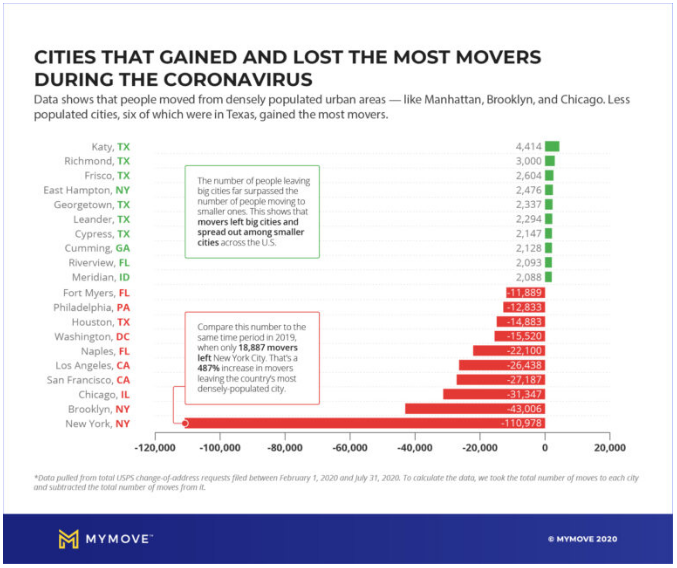
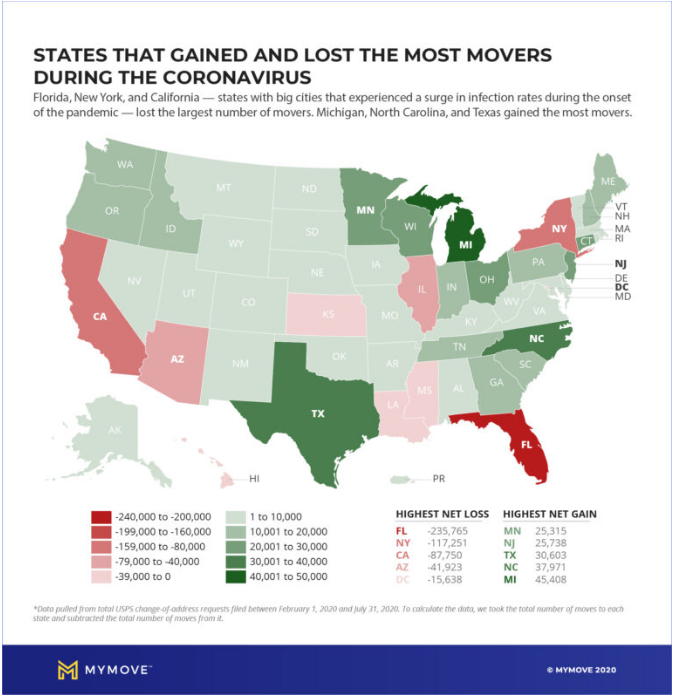
Mymove has studied migration patterns in 2020 with the COVID pandemic and over 15.9 million have moved during the pandemic based on USPS data. Urban density has been a big reason for people to move to smaller cities and suburbs. As you can see from the chart below, big cities have had a large outflow in the first half of 2020. This has resulted in rent reduction in dense and pricey cities, but the opposite in smaller cities and suburban places.
Net migration to “business” friendly or no-tax states
In the 20th century, people migrated to cities like New York or Los Angeles for better opporunities, but in the past couple of decades states like Texas have been able to lure many people with their “business” friendly or no-tax policies. Florida and Arizona are also considered “business” and tax friendly states and hence the net migration needs to be reviewed further.
Net Migration for quality of life
Quality of life is primarily defined by cost of living and access to amenities that people are looking for. Savills Research shows the top 10 cities for net migration in the US. The results should not be surprising for many. We see cities in Texas, Flordia and Georgia that have attracted sizable new population. This should give investors some ideas about places to invest.
Source: Savills Research using Oxford Economics Note: Only cities with GDP greater than $50bn considered
Investor Takeaways
In summary, we’ve seen how demographics is a key pillar of real estate investing. We’ve seen how net migration is a great indicator or proxy of demographics and even attractiveness of investment locations. We’ve also looked at migration patterns in US to help investors find states and cities that may be attractive investing targets.
Though net migration data should not be looked at on its own, looking at migration along with other key data will net investors some good investment locations and ideas. The action items for investors are to answer the questions: Do the locations you want to invest in have these positive migration characteristics? Can you update your investment thesis based on these locations?
Demographics and in particular net migration plays an outsized role in Real Estate. In this article, we’ll look at the key factors affecting real estate and why net migration is a good indicator to follow for real estate investors.
We’ll delve into why net migration is actually a great indicator for the top states, counties, and towns to invest in. We’ll look at some migration reports from 2020 and see if they can form the basis of some investment ideas in 2021 and beyond.
Key Pillars of Real Estate Investing
Real Estate business and investing is impacted by multiple factors, but we can group them into three major categories:
Demographics
Population Growth, Urbanization/Sub-urbanization, and Migration
Employment Growth
Income/Cost of living
Economic
Supply & Demand
Infrastructure – Technology / Transportation
Fiscal and monetary policies (for e.g. interest rates)
Incentives
Affordable housing policies
Tax and Federal housing incentives
State and local incentives and policies
For an individual investor, keeping track of the above can be overwhelming though some of the policies and economics may remain the same over years or even decades. Still, it is a stretch for individual investors. In this article, we’ll focus on demographics and see if net migration can be a proxy (or close to a proxy) to find states or cities to invest in.
Demographics and demographic trends
Our focus will be on demographics and in particular net migration in this article. Why is demographics a key pillar and why should we focus on that? Because demographics is all about the consumers i.e. tenants. One can have the best economic climate and the greatest policies, but at the end of the day a customer has to rent real estate and that is driven by demographics makeup. First, let us see the definition of demographics.
Demographics are the data that describes the composition of a population, such as age, race, gender, income, migration patterns, and population growth. These statistics are an often overlooked but significant factor that affects how real estate is priced and what types of properties are in demand
A customer (i.e. tenant) has to rent real estate in a given location and demographics is all about the customers. Investors should look at demographics at a given point of time as well as over a period of time (i.e. trends). It is also good to remember that many demographical trends were already underway and they only got accelerated due to the global pandemic in 2020.
Net Migration and Migration Trends
Investors realize that certain states or cities are growing because they see or hear about many moving to those places. For e.g. many people in New York realize that a lot of jobs are moving to the south, particularly Florida, and people follow those jobs. Net migration in certain regions, states, and cities surpass those of poorly faring places.
Savills, the International real estate firm has done studies on the reasons for migration throughout the world. Here is the summary of the impact of migration on real estate.
In-migration has a major impact on real estate as demand for both residential and commercial space increases. If supply is unable to match the demand, this often results in pressure on prices. We have analyzed data from Oxford Economics to understand which cities are expected to attract the largest net migration over the next five years as a percentage of their population.
Savills has the following take on the reasons major cities are seeing a lot of net migration:
Europe: Swiss Cities in demand
Asia: Attracting talent
North America: Quality of life
We’ll look at net migration data and statistics on the following factors in US and see if we see some patterns that will give some ideas on locations to invest.
Flight to suburbs and smaller cities
Flight to quality of life
Flight to “business” friendly and no-tax states
Net migration to secondary cities and suburbs
Mymove has studied migration patterns in 2020 with the COVID pandemic and over 15.9 million have moved during the pandemic based on USPS data. Urban density has been a big reason for people to move to smaller cities and suburbs. As you can see from the chart below, big cities have had a large outflow in the first half of 2020. This has resulted in rent reduction in dense and pricey cities, but the opposite in smaller cities and suburban places.
Net migration to “business” friendly or no-tax states
In the 20th century, people migrated to cities like New York or Los Angeles for better opporunities, but in the past couple of decades states like Texas have been able to lure many people with their “business” friendly or no-tax policies. Florida and Arizona are also considered “business” and tax friendly states and hence the net migration needs to be reviewed further.
Net Migration for quality of life
Quality of life is primarily defined by cost of living and access to amenities that people are looking for. Savills Research shows the top 10 cities for net migration in the US. The results should not be surprising for many. We see cities in Texas, Flordia and Georgia that have attracted sizable new population. This should give investors some ideas about places to invest.
Source: Savills Research using Oxford Economics Note: Only cities with GDP greater than $50bn considered
Investor Takeaways
In summary, we’ve seen how demographics is a key pillar of real estate investing. We’ve seen how net migration is a great indicator or proxy of demographics and even attractiveness of investment locations. We’ve also looked at migration patterns in US to help investors find states and cities that may be attractive investing targets.
Though net migration data should not be looked at on its own, looking at migration along with other key data will net investors some good investment locations and ideas. The action items for investors are to answer the questions: Do the locations you want to invest in have these positive migration characteristics? Can you update your investment thesis based on these locations?
Commercial Real Estate (CRE) Investor Question #90: What is the difference between rental yield and cap rate?
Rental yield is the net amount of money a landlord receives in rent over one year (after deducting operating expenses), shown as a percentage of the amount of money invested in the property.
So, Rental Yield = (Net Annual Rental Income / Cost) X 100
Note that rental yield is calculated on Net Operating Income without considering interest payment, tax and depreciation.
Cap rate (or capitalization rate) is the ratio between the net operating income produced by a real estate asset and its cost (or current market value).
So, Cap Rate = Net Operating Income / Value (or cost)
If you notice, both rental yield and cap rate appears to be same!
Rental yield is used to calculate the yield (return) of an asset whereas the cap rate is used to find the value (capitalized value) of an income generating real estate asset.
Commercial Real Estate (CRE) Investor Question #90: What is the difference between rental yield and cap rate?
Rental yield is the net amount of money a landlord receives in rent over one year (after deducting operating expenses), shown as a percentage of the amount of money invested in the property.
So, Rental Yield = (Net Annual Rental Income / Cost) X 100
Note that rental yield is calculated on Net Operating Income without considering interest payment, tax and depreciation.
Cap rate (or capitalization rate) is the ratio between the net operating income produced by a real estate asset and its cost (or current market value).
So, Cap Rate = Net Operating Income / Value (or cost)
If you notice, both rental yield and cap rate appears to be same!
Rental yield is used to calculate the yield (return) of an asset whereas the cap rate is used to find the value (capitalized value) of an income generating real estate asset.
Commercial Real Estate (CRE) Investor Question #89: Is real estate / housing a good hedge against inflation?
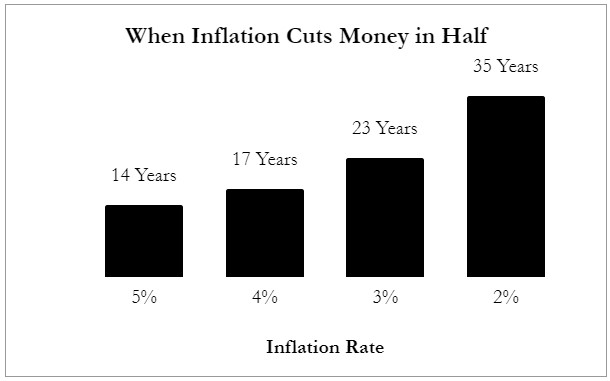
Yes, real estate or housing is a good hedge against inflation. Ben Carlson, a popular portfolio manager has an in-depth article on this question. Here’s a picture from his book on how inflation “destroys” wealth. On the flip side, having a mortgage can help counteract those interest payments over time.
Commercial Real Estate (CRE) Investor Question #87: I would like to get exposure to real estate asset class through REITs. Where do I start?
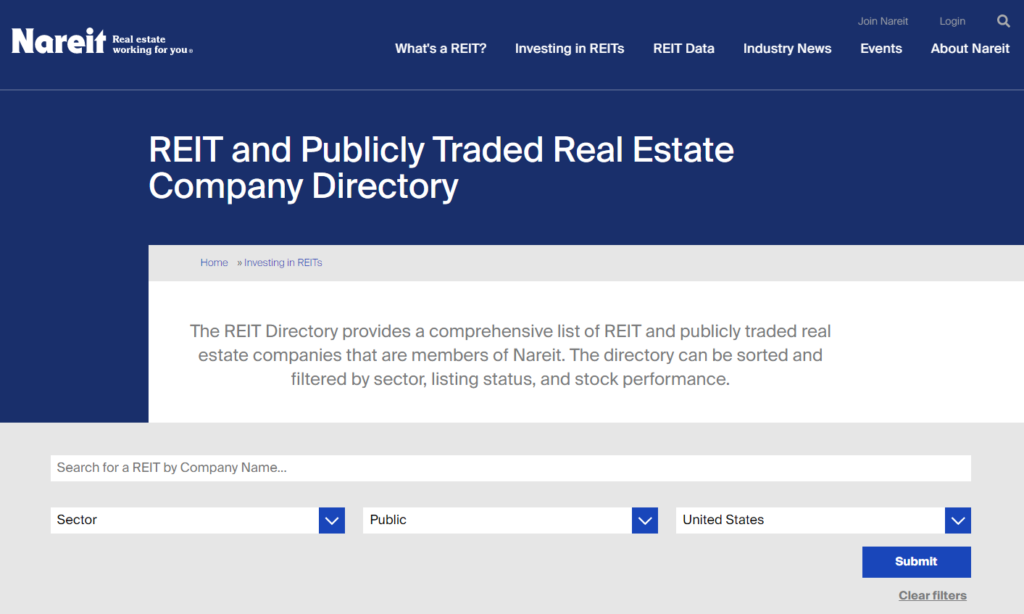
We’ve seen that REITs or REIT funds are a popular way to invest in real estate as they behave like stocks and can be bought through various brokerages. Many of the brokerages (for e.g. Fidelity, Merrill, Charles Schwab et.) also provide material and research on REITs as they do for stocks of companies.
You can research and trade with your brokerage. Another great resource to understand the world of REITs is Nareit. It provides a listing or directory of REITs and you can search and research based on various criteria as shown below.
Source: Nareit
Nareit also provides a list of REIT funds in addition to various other resources to get started with your research.