Tag: private equity

  • What exactly does an investor do?

    Whether investors like it or not, investing may be considered as a “lifestyle” job and may not get recognition for the hard work that goes into it. As an investor, don’t underestimate the investing process, the work involved, and above all your self-worth!

    If you were to go by general media, investing may come across as one of the easiest jobs on the earth. Popular culture doesn’t necessarily associate investing activities with skill or hard work. Moreover, the association with money may even lead some to think that investing is bad or greedy. Depending on personal situations, some tend not to have positive associations when it comes to investing.

    Before we look at society’s take on investing, what is your personal take on investing? Is it positive or negative? It is great if you have a favorable opinion on investing. Congrats! If you don’t have a favorable opinion of investing, there is some work to do. Because that is a big hurdle we need to overcome. Hope this article helps serves as an encouragement to many. We will address head-on the stereotypical take on investing and help wannabe investors overcome any negative thinking.

    How does the world see investors?

    For the most part, the world (i.e. primarily your family and friends) may see investing as an activity to multiply money i.e. becoming rich. The focus is on the results, becoming rich, then the process itself. The world may look up to rich people as aspirational, but still, the investors don’t get much love.

    If you’re an investor, should you worry about what the world thinks of investing? Not really. The real question is do you enjoy the investing process or work? Do you find it challenging? Like becoming a pro athlete, becoming a good investor is no small thing. Only the good ones succeed in the long run.

    If you listen to a leader in any field, one of the biggest aspects of success is working hard and long. The common lore is also that hard work and persistence lead to great success. It is tough not to agree, but what exactly is hard work in today’s age? In the decades past, a farmer who works in the field 10+ hours a day would be hard work. A factory worker working 10+ hours a day would be hard work.

    Historically, humans have been laborers or workers working in the field or factory for the entire day. Physical work was associated with hard work and is associated to this day. The physically demanding work is clearly attributed to hard work. But, what is hard work in today’s non-agricultural economy? Let us go through a few examples:

    • A Singer who creates music and works on it for 10+ hours a day in her studio. Is that hard work?
    • A Writer who writes a book working on it 10+ hours a day sitting at his computer. Is that hard work?
    • A Doctor seeing patients in his office for 10+ hours a day. Is that hard work?

    If you believe any of the above is hard work, then without doubt investing is also hard work. Investing involves a lot of learning, analysis, research, due diligence, writing and decision making. If you consider any of the above as hard work, investing also demands equal attention and work. It makes it all the more better if you actually enjoy it.

    Entrepreneurs, Workers and Investors

    We love entrepreneurial stories and successes. We love to hear success stories and everyone aspires to be rich. Let us take a tech entrepreneur. For the most part, the founder is going to develop on his own or with a team. Society traditionally attributes hard work with workers, creators, or producers. You produced grains, software, music, etc. Along those lines, investors don’t produce but invest in producers. And hence it becomes a comparison of the hard work of an entrepreneur vs. worker vs. an investor.

    For an investor, where is the hard work? The hard work is in keeping up to date on the markets, trends, finding deals, researching deals, doing due diligence, and talking to various stakeholders (legal, etc.) throughout the process. If you look at 20 real estate deals, you may be lucky if you proceed with one. Many hours need to be spent on research and following trends for one investing idea. You will have nothing to show for, say, 9 of 10 investing ideas. Even the one that you have invested in may not work out as planned.

    Even long-term investors (similar to writers etc.) sometimes may feel that they have wasted time pursuing all those opportunities. Many times our thesis may prove wrong and in those cases, it is a double whammy. You’ve lost both time and capital. That is a hard feeling.

    Investing as a habit and mindset

    Investors cannot change what others think of active or passive investors. Not everyone is going to become Warren Buffet. We don’t think anyone should care what others think of their profession or them. Be true to yourself, you know the hard work that you put in to get that one out of ten deals that returns 2x. Don’t be hard on yourself, especially during trying times.

    Here’s the habit of Warren Buffett, one of the prolific investors. Here’s his habit even after he’s worth $80B or more. Luck plays a role, but can anyone argue against his habits and investing methods that made him the investor he is today?

    Once he’s in the office, he hits the books. CNBC reported that Buffett estimates he spends 80 percent of his day reading. He recommends that people try to read at least 500 pages a day.

    Source: https://www.afr.com/work-and-careers/management/inside-warren-buffetts-daily-work-routine-from-645am-to-1045pm-20170906-gybn7t

    In addition to forming an investing habit, our mindset plays a critical role. If our mind is not into the job at hand, then it is hard for us to become an expert. We may have some doubts initially, but even after some time if we don’t get over our negative associations with investing, it is hard to excel in that field. It is hard to reach the destination when we are swimming against the tide (our mind).

    Talking about mindset, it is important to talk about an investor’s emotions and how an investor needs to be objective. An investor is simply put, a capital allocator i.e. you put money behind businesses or activities that give the most return on the capital. But, investing is also behavioral i.e. you’ve to fight your own emotions when investing. Emotions make you thrive in a sport or art. It is actually the opposite in investing. Don’t get attached to your investments. You can be passionate about investing, but you cannot be passionate about your investments.

    Takeaways

    Hope this article provides encouragement to many on the journey as investors. It is a journey, it is not “easy” work and people have to develop good investing habits. In addition to developing good investing habits, investors also need to check in their emotions and make behavioral changes. As investors face the quandary of not becoming attached to their investments. If it doesn’t make business sense, be ready to part with an investment at a loss or sell when the entire market is extremely bullish. If you’ve aspirations to become a good investor, start immediately and spend some time every day learning, investing, and building good habits!
  • Does Preferred Return matter?

    Commercial Real Estate (CRE) Investor Question #83: What is Preferred Return and does it matter?

    Preferred return is part of a distribution waterfall in real estate private equity. We’ve seen earlier that a Distribution Waterfall refers to the way in which profits are allocated between the participants – sponsors and Limited Partners – in an investment.

    Preferred return is a key component of the distribution waterfall and its main purpose is to align incentives between the sponsor and limited partners(LPs). Let us take an example from EquityMultiple, a popular funding website:

    In this arrangement, the investor will receive a preferred return before any capital is returned to the sponsor; the investor will receive profits up to a predefined percentage rate of return. Let’s look at our Bushwick Mixed-Use Redevelopment Project. The order of profit distribution is as follows:

    1) 100% pro rata to investors (including the Sponsor and LPs) until they have received a cumulative 10% preferred return

    2) Return of investor capital contributions, pro rata

    3) 30% to the sponsor and 70% to investors (including the Sponsor, such that the Sponsor receives a share of the 70% in addition to their 30%)

    Source: https://www.equitymultiple.com/blog/commercial-real-estate-practice/preferred-return

    Preferred return aligns the sponsor to the LPs i.e. the sponsors won’t get any extra profit until a certain threshold is met. In the above example, both sponsors and LPs will equally share the profits until 10%. After that sponsors, will take an extra percentage of the profits (also called promote) which can be an incentive for them to perform better. For LPs, preferred return is always better than no preferred return for a given a deal, all other parameters being the same.

  • Holding Period Returns by Property Type?

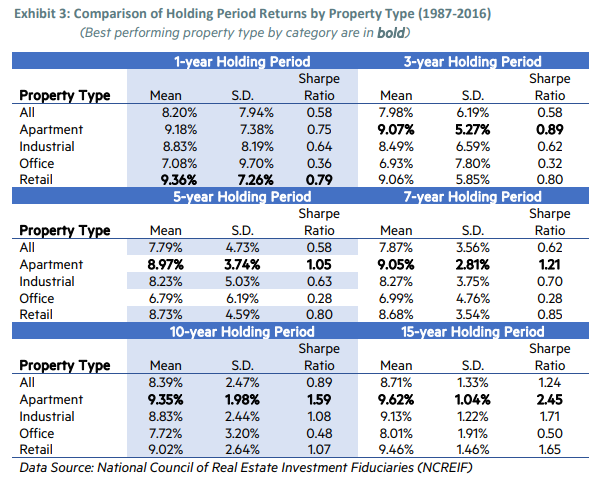
    Commercial Real Estate (CRE) Investor Question #82: Can you compare Holding Period Returns by Property Type?

    National Multifamily Housing Council (NMHC) has done a comprehensive study on the holding period returns of key property types. The primary data source for this research is the MSA-level NPI data which includes quarterly property income and appreciation returns for the period 1978-2Q 2017. The NPI is a total return index of privately held commercial real estate properties owned by tax-exempt institutional investors. NPI returns are reported on an unlevered basis.

    Summary is as follows, again the returns are based on an unlevered basis:

  • High IRR, but low distributions?

    Commercial Real Estate (CRE) Investor Question #81: I invested in a CRE deal with a 15% IRR over 5 years, but I am only getting 7% annual returns in the first couple of years. What gives?

    IRR is based on all the cash flows during the duration of the deal i.e. 5 years in this case. Whereas, cash on cash returns are based on monthly or quarterly cash flows and the distribution check is sent to you.

    IRR includes income from operations AND capital events (refinancing or sale). Cash on Cash primarily consists of operational cash flow, absent any capital events. During the first couple of years there will likely be income only from operations and hence the 7% annual returns. You can expect a bigger distribution during the capital events.

  • Passive Income Puzzle

    Commercial Real Estate (CRE) Investor Question #80: Mary has saved $100k for her first real estate investment. Her aim is to add a passive source of income, in addition to her corporate salary. She is considering an equity investment in a syndicated multi-family deal that produces 7% Cash on Cash in Year 1. How much monthly income can she expect in Year 1?

    We’ve seen in earlier posts that Cash-on-Cash return indicates the percentage of your investment you’ll get back, on an annual basis. It is the before-tax cash flow (i.e. Cash Flow after Financing) of an investment in a given period divided by the equity invested as of the end of that period.

    • Equity Invested = $100,000
    • Cash-on-Cash Return = 7%
    • Annual Income = 7% x $100,000 = $7,000
    • Monthly Income = $7,000/12 = $583

    Mary can expect $583 monthly if the deal is executed as planned.

  • Investor’s long-term decisions?

    Commercial Real Estate (CRE) Investor Question #79: What are the key long-term decisions facing an investor?

    Here are the key long-term decisions facing an investor. This will form the investor’s long-term investing approach or strategy:

    • What is the investor’s overall investment thesis/strategy?
    • What is the investor’s portfolio strategy for Real Estate?
    • What property type(s) and markets to focus on?
    • What size (# units) and price to focus on?
    • How many deals to do and the returns expected?
    • Who to invest with for the deals and the investor’s role?
  • Top 10 issues facing CRE?

    Commercial Real Estate (CRE) Investor Question #78: What are the top 10 issues facing Commercial Real Estate?

    The Counselors, a commercial trade group for CRE designees, surveyed its members to identify current and emerging trends in the commercial sector for its annual list of issues affecting real estate for 2020–2021:

    1. COVID-19
    2. Economic Renewal
    3. Capital Market Risk
    4. Public and Private Indebtedness
    5. Affordable Housing
    6. Flow of People
    7. Space Utilization
    8. Technology and Workflow
    9. Infrastructure
    10. Environment, Social, and Governance

    The full article can be found at https://magazine.realtor/daily-news/2020/06/30/top-10-issues-facing-commercial-real-estate

  • Top 10 issues facing CRE?

    Commercial Real Estate (CRE) Investor Question #78: What are the top 10 issues facing Commercial Real Estate?

    The Counselors, a commercial trade group for CRE designees, surveyed its members to identify current and emerging trends in the commercial sector for its annual list of issues affecting real estate for 2020–2021:

    1. COVID-19
    2. Economic Renewal
    3. Capital Market Risk
    4. Public and Private Indebtedness
    5. Affordable Housing
    6. Flow of People
    7. Space Utilization
    8. Technology and Workflow
    9. Infrastructure
    10. Environment, Social, and Governance

    The full article can be found at https://magazine.realtor/daily-news/2020/06/30/top-10-issues-facing-commercial-real-estate

  • Where is the innovation in CRETech or PropTech?

    Real Estate historically has been a slow adopter of technology, but the past few years have seen explosive growth and interest in Real Estate Tech (also called PropTech or CRETech). In this article, we’ll look at the PropTech landscape and try to understand the various areas within Real Estate where innovation (or so-called innovation) is occurring. As an investor in companies or deals, we need to evaluate how technology is disrupting the sector and who the winners will be.

    What exactly is CRETech or PropTech?

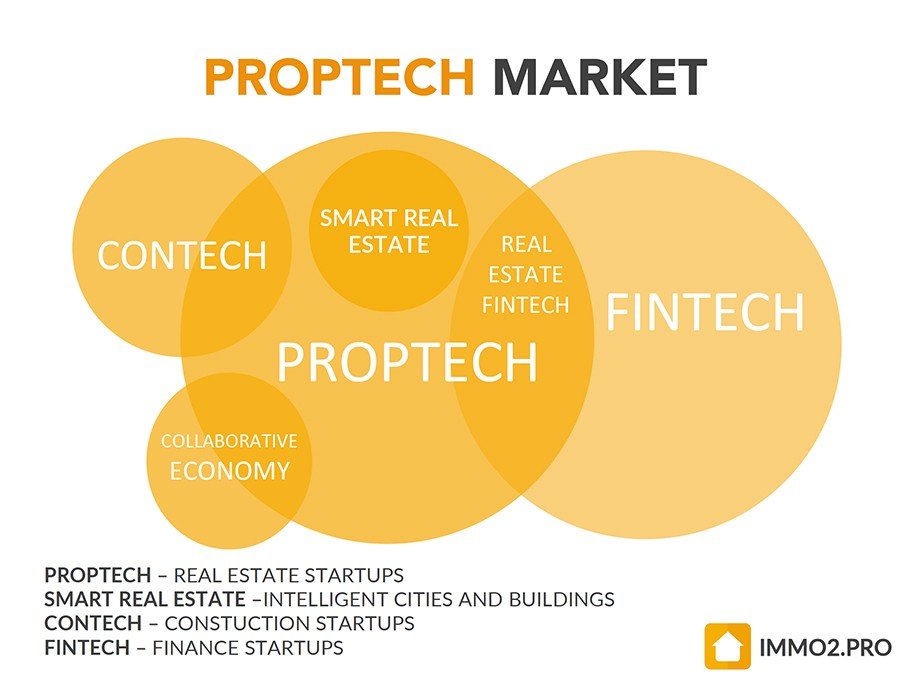
    Before we dwelve deeper in the PropTech space. What exactly is PropTech? There are also other terms like CRETech, ConTech, FinTech which are used in the space. Let us level set and review PropTech’s summary from a Medium article.

    In short, PropTech stands for all the companies that are taking on the real estate industry to make it better, spurred by an ever-changing digital landscape and new consumption patterns. It is still a new trend, and its scope will surely evolve as time goes by. Today, several verticals emerge within PropTech: the real estate market per se (PropTech), smart cities and buildings, the sharing economy, the home building industry (ConTech) and finance (FinTech). Both ConTech and FinTech have very close ties with the real estate industry.

    Source: https://medium.com/@vincentlecamus/proptech-what-is-it
    Image for post

    For the purpose of this article, we will only look at the proptech or CREtech space as there are MANY areas within that.

    Why PropTech now?

    2020 has probably been one of the toughest years for those in Commercial Real Estate (CRE). Some property types, like office, are having an impact even WAY bigger than the Global Financial Crisis (GFC) of 2008. Why worry about PropTech when the industry is itself going through a big change? No sector is immune to technology disruption or innovation. It started with retail, digital media, financial services, and the list goes on. Real Estate actually has been slow to adopt technological change with a lot of innovation only happening in the past few years.

    You may have heard this before but COVID-19 has accelerated digital and technology transformation in the real estate industry. This sentiment is captured by Michael Beckerman in his blog:

    Thinking about my industry, real estate technology, this past year was one that experienced 10X adoption in 10 months. It was for all the wrong reasons, but the speed and pace of tech adoption were truly staggering in real estate (and in most businesses during the pandemic). Literally overnight, companies had no choice but to get their tech house in order and to scramble to adopt as many smart solutions as possible to be able to reopen in the safest and healthiest manner possible, operate effectively in a remote work environment, and meet the needs of their customer base who were demanding digital solutions to engage with.

    And as I reflect on what’s ahead for real estate tech and real estate in general, I truly believe we are about to enter the “Golden Age of Real Estate!” 

    Source: https://www.cretech.com/news/goodbye-2020-hello-golden-era-of-real-estate-2/

    Lay of the Land

    Now that we understand CRETech and its importance today, what are the various areas of innovation? CRETech is a broad area and we’re going to break it down. We’ll use the breakdown used by Venture Scanner which has research, data, and trends on 2020 real estate technology startups. Even the sample below is bound to give some a headache, but the idea is to look at the broad categories and see what kind of disruption or innovation is happening. Put another way, where is a lot of Venture Capital (VC) money flowing into?

    Long-TermSearch 
COMPASS 
Apartment List 
Quikr 
VivaReal 
zirc»mgno 
Life, Home, P&C Insurance 
dewtottacQe 
neos 
kin. 
hippo 
Jetty 
Micro Insurance 
Home Services 
houzz 
Thumbtack 
OND 
Porch 
Clutter 
REAL ESTATE 
TECHNOLOGY 
• VENTURE 
SCANNER 
Property Management 
BuildingEngines 
ResMan 
auildium• 
HOSTMAKER 
appf0110 
Manager 
Construction Management 
PROCORE 
O EquipmentShare 
KATERRA 
FIELDWIRE 
BUILDINGCONNECTED 
Opendoor 
theguarantors 
IOT Home 
@KeyMe 
Portfolio Management 
lendinvest 
roofstock 
A Netatmo 
view 
EIGHT 
SLEEP 
Facility Management 
eden ENTOUCH 
sms assist 
00 BUDDERFLY 
Osmartfrog 
tad00 
00 
Short-Term Search 
CADRE 
Venture Scanner has research, data, and trends 
on 2,020* real estate technology startups 
HouseCanary 
Hotel Tonight 
airbnb 
vacasa 
•cleartrip 
Real Estate Agent Tools 
O HomeLight 
• states title 
V Qualia 
ribbon Topa 
PLACESTER 
Commercial Search 
I Kr Space 
INDUSTRIOUS 
Obreather 
MINDSPACE 
FUNDRISE 
Indoor Mapping 
Matterport 
HOVER 
NAVVIS 
MODSY 
0000my 
The graphic above shows only a sampling of companies in each category. •Data cumulative through February 2021.

    Here are the major categories of innovation:

    • Property Search and Real Estate Agent Tools (Home, Rentals, Commercial): This spans home, rentals, vacation, office space, etc.
    • Insurance, Home Services, and Marketplaces: Our focus here is on the home, property, or rental insurance sector
    • IoT, Property & Facilities Management: IoT devices and software used to manage properties and improve efficiencies
    • Construction Management: Different from Construction Technology, which is more physical built focused
    • Portfolio Management / Investment Management: Software for managing assets, deals, and investors
    • Design and Indoor Mapping: Interior and exterior architecture and design software

    Investor Takeaways

    In this article, we looked at the definition of PropTech, the lay of the land, and the key segments. The key segments of PropTech and the companies therein give an idea of the kind of innovation disrupting the CRE industry. As an investor and sponsor, it is important to leverage the platforms that will improve the efficiency across the entire investment lifecycle as well as the property lifecycle. As real estate investors, though we don’t need to follow each company, each segment of disruption give us opportunities to leverage for our real estate portfolio.

  • Where is the innovation in CRETech or PropTech?

    Real Estate historically has been a slow adopter of technology, but the past few years have seen explosive growth and interest in Real Estate Tech (also called PropTech or CRETech). In this article, we’ll look at the PropTech landscape and try to understand the various areas within Real Estate where innovation (or so-called innovation) is occurring. As an investor in companies or deals, we need to evaluate how technology is disrupting the sector and who the winners will be.

    What exactly is CRETech or PropTech?

    Before we dwelve deeper in the PropTech space. What exactly is PropTech? There are also other terms like CRETech, ConTech, FinTech which are used in the space. Let us level set and review PropTech’s summary from a Medium article.

    In short, PropTech stands for all the companies that are taking on the real estate industry to make it better, spurred by an ever-changing digital landscape and new consumption patterns. It is still a new trend, and its scope will surely evolve as time goes by. Today, several verticals emerge within PropTech: the real estate market per se (PropTech), smart cities and buildings, the sharing economy, the home building industry (ConTech) and finance (FinTech). Both ConTech and FinTech have very close ties with the real estate industry.

    Source: https://medium.com/@vincentlecamus/proptech-what-is-it
    Image for post

    For the purpose of this article, we will only look at the proptech or CREtech space as there are MANY areas within that.

    Why PropTech now?

    2020 has probably been one of the toughest years for those in Commercial Real Estate (CRE). Some property types, like office, are having an impact even WAY bigger than the Global Financial Crisis (GFC) of 2008. Why worry about PropTech when the industry is itself going through a big change? No sector is immune to technology disruption or innovation. It started with retail, digital media, financial services, and the list goes on. Real Estate actually has been slow to adopt technological change with a lot of innovation only happening in the past few years.

    You may have heard this before but COVID-19 has accelerated digital and technology transformation in the real estate industry. This sentiment is captured by Michael Beckerman in his blog:

    Thinking about my industry, real estate technology, this past year was one that experienced 10X adoption in 10 months. It was for all the wrong reasons, but the speed and pace of tech adoption were truly staggering in real estate (and in most businesses during the pandemic). Literally overnight, companies had no choice but to get their tech house in order and to scramble to adopt as many smart solutions as possible to be able to reopen in the safest and healthiest manner possible, operate effectively in a remote work environment, and meet the needs of their customer base who were demanding digital solutions to engage with.

    And as I reflect on what’s ahead for real estate tech and real estate in general, I truly believe we are about to enter the “Golden Age of Real Estate!” 

    Source: https://www.cretech.com/news/goodbye-2020-hello-golden-era-of-real-estate-2/

    Lay of the Land

    Now that we understand CRETech and its importance today, what are the various areas of innovation? CRETech is a broad area and we’re going to break it down. We’ll use the breakdown used by Venture Scanner which has research, data, and trends on 2020 real estate technology startups. Even the sample below is bound to give some a headache, but the idea is to look at the broad categories and see what kind of disruption or innovation is happening. Put another way, where is a lot of Venture Capital (VC) money flowing into?

    Long-TermSearch 
COMPASS 
Apartment List 
Quikr 
VivaReal 
zirc»mgno 
Life, Home, P&C Insurance 
dewtottacQe 
neos 
kin. 
hippo 
Jetty 
Micro Insurance 
Home Services 
houzz 
Thumbtack 
OND 
Porch 
Clutter 
REAL ESTATE 
TECHNOLOGY 
• VENTURE 
SCANNER 
Property Management 
BuildingEngines 
ResMan 
auildium• 
HOSTMAKER 
appf0110 
Manager 
Construction Management 
PROCORE 
O EquipmentShare 
KATERRA 
FIELDWIRE 
BUILDINGCONNECTED 
Opendoor 
theguarantors 
IOT Home 
@KeyMe 
Portfolio Management 
lendinvest 
roofstock 
A Netatmo 
view 
EIGHT 
SLEEP 
Facility Management 
eden ENTOUCH 
sms assist 
00 BUDDERFLY 
Osmartfrog 
tad00 
00 
Short-Term Search 
CADRE 
Venture Scanner has research, data, and trends 
on 2,020* real estate technology startups 
HouseCanary 
Hotel Tonight 
airbnb 
vacasa 
•cleartrip 
Real Estate Agent Tools 
O HomeLight 
• states title 
V Qualia 
ribbon Topa 
PLACESTER 
Commercial Search 
I Kr Space 
INDUSTRIOUS 
Obreather 
MINDSPACE 
FUNDRISE 
Indoor Mapping 
Matterport 
HOVER 
NAVVIS 
MODSY 
0000my 
The graphic above shows only a sampling of companies in each category. •Data cumulative through February 2021.

    Here are the major categories of innovation:

    • Property Search and Real Estate Agent Tools (Home, Rentals, Commercial): This spans home, rentals, vacation, office space, etc.
    • Insurance, Home Services, and Marketplaces: Our focus here is on the home, property, or rental insurance sector
    • IoT, Property & Facilities Management: IoT devices and software used to manage properties and improve efficiencies
    • Construction Management: Different from Construction Technology, which is more physical built focused
    • Portfolio Management / Investment Management: Software for managing assets, deals, and investors
    • Design and Indoor Mapping: Interior and exterior architecture and design software

    Investor Takeaways

    In this article, we looked at the definition of PropTech, the lay of the land, and the key segments. The key segments of PropTech and the companies therein give an idea of the kind of innovation disrupting the CRE industry. As an investor and sponsor, it is important to leverage the platforms that will improve the efficiency across the entire investment lifecycle as well as the property lifecycle. As real estate investors, though we don’t need to follow each company, each segment of disruption give us opportunities to leverage for our real estate portfolio.