Category: Digital & Tech

Our opinion and views on digital, technology, and other topics of interest to investors and enterprises. We will cut through the noise.

  • The Future of Capital Markets Technology

    Capital Markets are where savings and investments are channeled between suppliers, people, or institutions with capital to lend or invest — as well as those in need (Hayes, Investopedia). Suppliers typically include banks and investors while those who seek capital are businesses, governments, and individuals. Capital markets are composed of primary and secondary markets.

    The most common capital markets are the stock market and the bond market. However other, more complex, markets include the CRE (Commercial Real Estate) Market, Equity Capital Market (ECM), as well as many others that are typically geared towards a specific investor. Therefore there is not as much trading volume or frequency, since the broader excitement is not the same. Even though real estate is the world’s largest asset class, we’ve seen a recent decline in CRE investment. Medium recently posted an article detailing the advantages of a platform called Beacon Platform, Inc, which was a critical, major acquisition for Centena.

    Medium: Modernizing the Capital Markets Technology Stack: Centana’s Investment in Beacon Platform, Inc.

    Why do customers choose Beacon?

    Time-to-Value and ROI. Today, companies continue to deal with cumbersome internal applications that have been stitched together, often with legacy code and/or 3rd party vendors in the Trading and Risk Management space, which are “black box” and difficult, if not impossible, to alter.

    Beacon’s entire code base is flexible and transparent (i.e. the code is made available to customers) and seamlessly integrates with existing software and other 3rd party solutions (like Murex and Calypso), or in-house proprietary solutions, which helps drive quick time-to-value and high utility.

    In a fraction of the time and cost of alternative solutions, Beacon has helped customers achieve objectives such as migrating workloads to the cloud, expanding into new markets, upgrading legacy code by placing it within a modern developer wrapper and extending analytics and applications to customers’ end-users.

    -Matt Alfieri
    Key Takeaways

    When it comes to capital markets technology, the evolving nature of the tech space all but ensures we will see new technologies introduced into capital markets operations. Additionally, while this may sound like an advertisement for Beacon (though FinYork has absolutely no affiliation to it), the critical feature to note is this is an exemplary illustration of where capital markets technology appears to be heading.

    Vertical SaaS or cloud industry solutions, instead of legacy or proprietary in-house solutions, are showing us that they’re easier to replace than many executives originally thought. You should expect to see a similar effect here as with PropTech, as it becomes more widely available and accepted by savvy executives and high net worth real estate investors. You definitely do not want to be the firm who is continuing to use antiquated capital markets technologies. This puts you at an immediate, huge disadvantage. It makes it that much harder to catch up with your competitors, who have a leg-up as they’ve already implemented innovative technologies.

    All this goes to say that SaaS, digital transformation, cloud technologies, PropTech, and even niche technologies that aim to improve efficiency in capital markets are going to play an integral part of the future. The success of firms who will adapt them largely depends on the success those firms will have in the implementation process. To be sure, capital markets technology is only going to continue getting more efficient, robust, and easier to adapt.

  • What’s Holding Back PropTech?

    While PropTech has seen some growth in recent years, more so before the COVID-19 pandemic, we still haven’t seen the manifestation of the scale of technological revolution in the property industry we were once promised. The vast majority of buildings we come across in our daily lives are still operating in traditional ways, using outdated but proven equipment. Let’s dive into why we are yet to see the kind of transformative innovation we were expecting on a broader scale.

    Real estate is widely recognized as the world’s largest financial asset class. However, in today’s world, we often see companies rise to prominence before crashing and burning in a matter of a few short years. Most of the biggest corporations in the world today didn’t have a trace of existence 30 years ago. The real estate asset class could not be categorized more differently. It’s not only the largest asset class (by far), it’s also the oldest asset class (Hagerty, Propmodo). Historically, the property industry is a very slow, cautious sector. Unlike an App, such as Uber for example, buildings and other construction projects take many years from the design process to the completion of the physical structure. This is attributed partially to the reality that protecting buildings and the occupants inside them is paramount. In both the residential and commercial real estate sub-sectors, moving too fast and making a mistake that may lead to a potential building collapse is simply out of the question. Due to real estate’s conservative business model, even the most sophisticated PropTech products are having a difficult time gaining broad, large-scale traction (Hagerty, Propmodo).

    Ernst & Young’s Comprehensive PropTech Study

    An Ernst & Young (E&Y) survey recently found that 43% of those who provide PropTech products are majorly struggling with widespread adoption across a given client’s business. Additionally, the same research discovered that 35% of PropTech providers are seeing a very sizable lack of scaling, as a direct result of their application being adopted. Perhaps the biggest shock from this study is 39% of respondents are yet to adopt even a single PropTech tool.

    In addition to safety concerns, the attitude of business managers has been noted as a key opponent to PropTech’s success. Value in real estate is most frequently determined by three factors: 1) location, 2) size, and 3) finishes [amenities]. Reducing costs and increasing efficiency plays a major role in the construction industry, but we don’t typically see those same levels of concern in asset management. PropTech is actually attempting to change that. With the right technology, savings from efficiency, integration, and automation can start to pile up (Hagerty, Propmodo). Having the ability to tap into data generated by buildings is providing actionable insights that are too big of a potential game-changer to ignore. For individuals or companies that already have a real estate strategy in place, implementing innovative PropTech is only putting them further ahead of the pack. Executives, board members, and direct real estate investors alike clearly understand the need for PropTech. The biggest challenge remains in implementation.

    Conclusions Drawn From Ernst & Young’s Study

    We can conclude from the E&Y study that the remedy starts with ensuring the right people are in place. E&Y found 53 percent of real estate owners don’t feel they have the in-house talent to successfully adopt new technology. It’s worth taking a moment to let that sink in. More than half of executives, or very senior personnel in a position to make these decisions, are not confident in their own teams’ implementation ability. Without technology-minded talent and leadership, it’s hard to see the light at the end of the tunnel. Traditional real estate leadership has often been hesitant – or perhaps more precisely, even negligent – in scrapping outdated systems and processes they’ve relied on for decades. Again, PropTech aims to alter that mindset entirely. Leveraging technology is about focusing on future potential, rather than cost. There are undoubtedly sizable upfront costs associated with widespread PropTech adoption across a portfolio. What makes executives and board members in particular hesitant with implementing PropTech is the mindset about their obligation to stakeholders being centered around cost cutting. Why bother spending money “fixing something” that isn’t broken? Buildings are operating just fine without the need for any sweeping, technological overhaul. That’s the position traditional real estate leadership has taken; they are extremely hesitant to tolerate large capital expenditures on risky, bold technologies that don’t have a clear trajectory of return on investment. Succinctly, from the E&Y analysis we can clearly deduce that executives and board members need to ensure there are enough personnel focused on technology to help senior management understand there in fact is a return on investment from implementing various PropTech products. It’s not as clear-cut, but the long-term financial benefits are there.

    Again, referring back to the same E&Y data, almost 60% of real estate companies surveyed responded that they find new systems difficult to integrate with existing platforms. This is viewed as a further hinderance for executives because this translates to times and resources in order to get things set up, further disincentivizing them by piling on additional costs and additionally clouding the potential return on investment. The rapid pace of development and deployment is leading to piecemeal technology strategies instead of full end-to-end solutions, which is easier for leadership to recognize. As the PropTech industry matures, consolidations, acquisitions, and a wider array of products to service every aspect of portfolios could help solve some of those problems (Hagerty, Propmodo).

    “As investors begin to see the benefit of companies adopting technology, we believe they will help drive the industry forward more rapidly in the same way that investor pressure has encouraged companies to do more and report more on ESG related issues”.

    Mark Grinis, Ernst & Young Global Real Estate, Hospitality, & Construction Leader

    Perhaps an unpopular opinion, but some have compelling arguments that growing pains in PropTech industry is actually a good thing. The real estate industry was stagnating for decades, perhaps centuries. In a few short years, technology has worked its way into practically every executive conversation or board member meeting. With that being said, retrofitting existing buildings will not be a viable solution for every – or most – property owners.  Building technology into the bedrock of the property industry is a ground-up exercise, literally, which makes taking stock of progress that’s been made that much more important. That’s where PropTech comes in. There’s plenty of obstacles in the industry slowing down PropTech at the moment, but there’s no stopping it, especially it in the long-term as we’ve seen companies rapidly expand cloud and digital transformation technologies.  

  • CRE PropTech: How Will it be Affected by the Aftermath of COVID-19

    COVID-19 will forever change the landscape of CRE (Commercial Real Estate), especially for firms who are used to operating almost exclusively in a brick and mortar, office environment. The aftermath of COVID-19 will almost undoubtedly include more “smart” CRE. To put it another way, as software like Zoom has become a household name – whereas prior to COVID-19 it was largely known to the white-collar working class – you can expect firms to invest less in physical property. Consequently, the data shows that in every sector, at least in the short-term, PropTech investment has slowed down (Abuelsamid, Forbes).

    Intuitively, successful long-term investors tend to be heavily data driven, which has been a big reason for the slowdown in PropTech. Investors within the real estate sector are exercising caution with regards to their portfolios, as well as towards new deals for CRE projects. A great deal of this is attributed to the initial concept of this piece (which Forbes agrees with): corporations and startup firms alike are showing an increased interest in technology, which allowed them to work “smart” (i.e. Zoom) despite the pandemic (Abuelsamid, Forbes). With decreased overhead being a large incentive for startups and pressure from shareholders to cut costs being a large incentive for big corporations, many are realizing that the way they were forced to do business is perhaps a more efficient way than they were prior to the COVID-19 pandemic.

    With that being said, as we mentioned in a previous piece, PropTech is still a relatively new field to most investors. The CRE investing subsector of PropTech is even smaller, so there’s definitely still plenty of opportunity for successful PropTech investment vehicles. Even with the current data showing there’s slowed growth in the PropTech CRE subsector, that’s not to say you shouldn’t keep an eye out for solid investment opportunities, as they are still out there and can definitely be lucrative. This is the main reason you’ll typically find seasoned, experienced investors in the CRE PropTech space. There is opportunity for large returns, but it is definitely slim.

    In the longer-term, there’s no reason right now to believe firms will switch back to investment in more physical property, especially when that money can be spent on human capital. Therefore, if you’re interested in PropTech investment strategies, you should not expect to see consistent positive performance from PropTech CRE investments. On the other hand – while this subject deserves a complete discussion on its own – residential PropTech is definitely on the rise (Aramati, Forbes). With a major push coming from cloud technologies and digital transformation, there’s a lot more investment in “smart” residential real estate as opposed to commercial real estate. Generally speaking, investments in “smart” technology have gained a tremendous amount of traction and thereby very large returns for earlier stage investors. Again, as we discussed in a previous article regarding PropTech, technological advancement is the future and investors who are looking for the next Amazon or Google in the real estate market ought to look into residential PropTech options with a more favorable outlook than commercial PropTech.

  • CRE PropTech: How Will it be Affected by the Aftermath of COVID-19

    COVID-19 will forever change the landscape of CRE (Commercial Real Estate), especially for firms who are used to operating almost exclusively in a brick and mortar, office environment. The aftermath of COVID-19 will almost undoubtedly include more “smart” CRE. To put it another way, as software like Zoom has become a household name – whereas prior to COVID-19 it was largely known to the white-collar working class – you can expect firms to invest less in physical property. Consequently, the data shows that in every sector, at least in the short-term, PropTech investment has slowed down (Abuelsamid, Forbes).

    Intuitively, successful long-term investors tend to be heavily data driven, which has been a big reason for the slowdown in PropTech. Investors within the real estate sector are exercising caution with regards to their portfolios, as well as towards new deals for CRE projects. A great deal of this is attributed to the initial concept of this piece (which Forbes agrees with): corporations and startup firms alike are showing an increased interest in technology, which allowed them to work “smart” (i.e. Zoom) despite the pandemic (Abuelsamid, Forbes). With decreased overhead being a large incentive for startups and pressure from shareholders to cut costs being a large incentive for big corporations, many are realizing that the way they were forced to do business is perhaps a more efficient way than they were prior to the COVID-19 pandemic.

    With that being said, as we mentioned in a previous piece, PropTech is still a relatively new field to most investors. The CRE investing subsector of PropTech is even smaller, so there’s definitely still plenty of opportunity for successful PropTech investment vehicles. Even with the current data showing there’s slowed growth in the PropTech CRE subsector, that’s not to say you shouldn’t keep an eye out for solid investment opportunities, as they are still out there and can definitely be lucrative. This is the main reason you’ll typically find seasoned, experienced investors in the CRE PropTech space. There is opportunity for large returns, but it is definitely slim.

    In the longer-term, there’s no reason right now to believe firms will switch back to investment in more physical property, especially when that money can be spent on human capital. Therefore, if you’re interested in PropTech investment strategies, you should not expect to see consistent positive performance from PropTech CRE investments. On the other hand – while this subject deserves a complete discussion on its own – residential PropTech is definitely on the rise (Aramati, Forbes). With a major push coming from cloud technologies and digital transformation, there’s a lot more investment in “smart” residential real estate as opposed to commercial real estate. Generally speaking, investments in “smart” technology have gained a tremendous amount of traction and thereby very large returns for earlier stage investors. Again, as we discussed in a previous article regarding PropTech, technological advancement is the future and investors who are looking for the next Amazon or Google in the real estate market ought to look into residential PropTech options with a more favorable outlook than commercial PropTech.

  • PropTech: What is it and Who Are the Primary Investors?

    Property Technology, commonly known as PropTech, refers to the use of Information Technology (IT) to assist both individuals and companies buy, sell, research, and manage real estate. While still a relatively new field, the convergence of technologies, cloud, and digital transformation are key forces driving PropTech forward. The goals of PropTech include: minimizing the cost and resources associated with real estate transactions, maximizing efficiency, saving time, and personalizing property management. This concept is similar to FinTech, where the focus is on the use of technology in finance. PropTech utilizes digital innovation and other technologies to address real estate market participants’ needs in the property industry.

    Efficient PropTech is specifically devised to streamline processes and connect market participants in all aspects of real estate. Therefore, PropTech directly impacts buyers, sellers, brokers, lenders, landlords, as well as others. One of the most popular current PropTech technology is virtual reality software, which allows prospective buyers to virtually walk through properties, construction sites, and more. Additional well-known PropTech technologies include software for reporting repairs, splitting rent payments, and crowdfunding new real estate projects.

    At this time, PropTech consists of three major market segments: (1) smart home, (2) sharing real estate, and (3) real estate FinTech.

    Smart Home

    A smart home is equipped with digital platforms that monitor, manage, or operate specific property assets. Amazon Echo’s Alexa is an example of something in a smart home. Generally, they are comprised of digital platforms that monitor, manage or operate specific property assets. Other examples could be something a security surveillance system that warns property owners of a threat, a smart thermostat that regulates the temperature of uninhabited units, or smart light bulbs that can be turned on by a smartphone app or digital assistant.

    Sharing Real Estate

    This refers to technology that facilitates the processes involved with sharing or renting real estate assets, such as land, offices, storage, apartments, parking lots, and more. For example, there could be a software that facilitates automatic online payments for retail spaces occupied in a building owned by a property management company.

    Real Estate FinTech

    This segment of PropTech includes applications that involve buying and selling real estate assets. A platform that reduces the amount of physical paperwork and documentation involved in a home purchase can be thought of as an example. Stay tuned for a deeper conversation regarding the relationship between PropTech and FinTech.

    With PropTech still being a relatively new field, the investors are largely comprised of wealthy, seasoned real estate investing experts (or at least those with a real estate investing background). In addition to being backed by some of the world’s largest real estate giants, it would be fair to say most of the individuals behind the world’s biggest tech companies, agree that future technology is pushing towards digital transformation (Donati, Forbes). Therefore, you’ll find investors that are interested in a sort of ‘futuristic’ technology category when it comes to financial investments. For example, PropTech investors would be very likely to also be interested in FinTech and Cryptocurrency. While the latter two seem to be more popular at the moment, PropTech is definitely something well worth looking into, especially if you have a specific interest in real estate investing.

  • PropTech: What is it and Who Are the Primary Investors?

    Property Technology, commonly known as PropTech, refers to the use of Information Technology (IT) to assist both individuals and companies buy, sell, research, and manage real estate. While still a relatively new field, the convergence of technologies, cloud, and digital transformation are key forces driving PropTech forward. The goals of PropTech include: minimizing the cost and resources associated with real estate transactions, maximizing efficiency, saving time, and personalizing property management. This concept is similar to FinTech, where the focus is on the use of technology in finance. PropTech utilizes digital innovation and other technologies to address real estate market participants’ needs in the property industry.

    Efficient PropTech is specifically devised to streamline processes and connect market participants in all aspects of real estate. Therefore, PropTech directly impacts buyers, sellers, brokers, lenders, landlords, as well as others. One of the most popular current PropTech technology is virtual reality software, which allows prospective buyers to virtually walk through properties, construction sites, and more. Additional well-known PropTech technologies include software for reporting repairs, splitting rent payments, and crowdfunding new real estate projects.

    At this time, PropTech consists of three major market segments: (1) smart home, (2) sharing real estate, and (3) real estate FinTech.

    Smart Home

    A smart home is equipped with digital platforms that monitor, manage, or operate specific property assets. Amazon Echo’s Alexa is an example of something in a smart home. Generally, they are comprised of digital platforms that monitor, manage or operate specific property assets. Other examples could be something a security surveillance system that warns property owners of a threat, a smart thermostat that regulates the temperature of uninhabited units, or smart light bulbs that can be turned on by a smartphone app or digital assistant.

    Sharing Real Estate

    This refers to technology that facilitates the processes involved with sharing or renting real estate assets, such as land, offices, storage, apartments, parking lots, and more. For example, there could be a software that facilitates automatic online payments for retail spaces occupied in a building owned by a property management company.

    Real Estate FinTech

    This segment of PropTech includes applications that involve buying and selling real estate assets. A platform that reduces the amount of physical paperwork and documentation involved in a home purchase can be thought of as an example. Stay tuned for a deeper conversation regarding the relationship between PropTech and FinTech.

    With PropTech still being a relatively new field, the investors are largely comprised of wealthy, seasoned real estate investing experts (or at least those with a real estate investing background). In addition to being backed by some of the world’s largest real estate giants, it would be fair to say most of the individuals behind the world’s biggest tech companies, agree that future technology is pushing towards digital transformation (Donati, Forbes). Therefore, you’ll find investors that are interested in a sort of ‘futuristic’ technology category when it comes to financial investments. For example, PropTech investors would be very likely to also be interested in FinTech and Cryptocurrency. While the latter two seem to be more popular at the moment, PropTech is definitely something well worth looking into, especially if you have a specific interest in real estate investing.

  • South Korea Responds After China Launches Cryptocurrency Exchange Restrictions

    Following China’s statement of new restrictions and regulations they are placing on Bitcoin, which sent cryptocurrency exchanges tumbling, South Korea responded by rolling out their own restrictions. On June 13th, 2021, The Korea Times reported South Korea’s Financial Services Commission (FSC) released a public statement that would force banks to classify clients with cryptocurrency in their portfolio as “high-risk”. Those individuals would in turn be subject to more stringent monitoring and trading rules. South Korea’s goal in doing this was made abundantly clear: reducing the regulatory risks posed to banks servicing crypto firms (Hwang, The Korea Times).

    The FSC’s new guidelines make it mandatory for banks to report high-volume crypto transactions from suspicious entities. Additionally, they are requiring impacted firms – current and future – to implement a KYC (Know Your Customer) guideline prior to partnering with any crypto exchanges. As mentioned, this comes directly on the heels of China (the largest economy in the world) announcing rigorous cryptocurrency trading regulations. South Korea appears to be aligning themselves more closely with their neighbor, however other countries and governments have been looking at cryptocurrency exchange trading from a different perspective.

    Goldman Sachs responded to the news very quickly, announcing to their shareholders that they will expand into Ether in order to limit their exposure to just Bitcoin (Singh, MINT). The legendary investment bank will additionally offer futures trading and options for Ether, but they do not appear to have any plans of exiting the crypto space. That’s because there is still plenty of room for capitalization. To some, volatility suggests greater return opportunity, rather than enhanced risk potential. Additionally, as Mathew McDermott, Goldman Sachs’ Global Head of Digital Assets, announced the firm will be offering services to facilitate trades involved with exchange-traded notes linked to Bitcoin (Singh, MINT).

    When it comes to other governments, many emerging markets and emerging economies in particular are looking to expand cryptocurrency acceptance. The following day, June 14th, 2021, Tanzania’s President suggested the country’s central bank should explore cryptocurrency. “We have witnessed the emergence of a new journey through the internet,” Samia Suluhu Hassan – President of Tanzania – said, also adding “the central bank should be ready for the changes and not be caught unprepared” (Haig, Cointelegraph).

    The same desire was echoed by several Latin American countries in particular, most notably El Salvador and Paraguay, where Bitcoin has been mandated as legal tender. The President of Tanzania may have more of a realistic pulse on crypto trading, unlike China and South Korea, as she appears very cognizant of the profound emergence of digital currency as a widely popular, booming global investment tool. Rather than trying to restrict and limit trading practices, which can be extremely important in certain instances and definitely not meant to be underscored, recognizing the uncontrollable phenomenon crypto trading has become is valuable in and of itself. Restricting or attempting to disincentivize investors from participating in this particular market can adversely lead to more fraudulent activity, as investors clearly see a benefit to trading in this market, but are constricted from it because of their country’s regulations. Furthermore, this may lead to some seeking out non-traditional, or even illegal, methods of participating in that market because they have to circumvent rules.

  • What is Cryptocurrency and is it a Good Investment in 2021? Here’s What You Need to Know

    Cryptocurrency is a form of payment that can be exchanged online for goods and services. Many companies have issued their own currencies, often called tokens, and these can be traded specifically for the good or service that the company provides. Cryptocurrencies work using a technology called blockchain. Blockchain is a decentralized technology spread across many computers that manages and records transactions. A large part of the appeal of this digital technology is in its security.

    Just recently, in the middle of April 2021, many cryptocurrencies, including Bitcoin, have hit their all-time peak trading price. The table below shows the 10 largest trading cryptocurrencies by market capitalization as tracked by CoinMarketCap, a cryptocurrency data and analytics provider.

    It may be surprising for readers to learn there are currently over 6,700 different cryptocurrencies that are publicly traded, with a total market capitalization of over $2.2 trillion (CoinMarketCap). But the central question remains: why have cryptocurrencies continued to skyrocket in popularity and are they a good investment?

    Studies have shown different reasons for the rise in cryptocurrency trading, but there are definite common denominators between the different sources. There’s the most popular reason; investors see this as the ‘currency of the future’, therefore they are buying now in anticipation of elevated future prices. Secondary reasons include a particular interest in crypto’s technology and security aspects (as previously mentioned), plus many investors cite them as being immune from inflation concerns, since there are no central bank regulations. Finally, crypto’s are attractive investments to swing sellers due to their relatively large and very rapid market price changes. For example, while Bitcoin traded at close to $20,000 in December 2017, its value then dropped to as low as about $3,200 a year later. By December 2020, it was trading at record levels again.

    Finally, onto the golden question every market participant looks to make sense of: are cryptocurrencies a good investment at this time? Unfortunately, the answer isn’t a straightforward yes or no. As with the lastly cited example of Bitcoin, you can make a lot of money in a short period of time, if you are entering and exiting the market at a wise time. However, it’s important to keep in mind that at this stage, these are purely speculative investments with no tangible assets to back them. Nonetheless, investors are looking for undervalued assets or securities but just like any other currency, cryptocurrencies generate no cash flow, so for you to profit, someone has to pay more for the currency than you did. This is specifically dubbed “the greater fool” theory of investment. Contrast that to a well-managed business, which increases its value over time by growing the profitability and cash flow of the operation. The latter is a far more stable, confident, long-term investment at, which is where cryptocurrencies are currently lacking; there seems to be a general consensus, especially amongst more passive longer-term investors, that cryptocurrencies have a very serious lack of predictability. No matter how interesting the concept is, for those who believe crypto’s like Bitcoin are the ‘currency of the future’, it has to be noted that a currency eventually needs to build a proven track record of stability to continue to enthuse new investors.

  • Mining Bitcoin: Tech Energy and Power

    For years, Bitcoin has been popularized as the face of cryptocurrency. After Bitcoin was introduced, it received critical backing from several prominent celebrity investment advisors and other notable figures, significant popularity followed. Once Bitcoin gained a platform, it gave rise to tens of thousands of other cryptocurrencies being mined and traded daily. Whether you believe in crypto’s or not, it’s hard to argue we’re not in the middle of one of the most exciting cryptocurrency trading times. While many participate in daily trading on platforms like Robinhood, Coinbase, CashApp, etc., not many of them have any insight into the technological know-how on creating a Bitcoin, or the Bitcoin energy required.

    In reality, the computer-based miners who create bitcoins use vast amounts of electrical power and energy in the process. The energy-heavy process even leads some experts to suggest that Bitcoin harms the environment. The process, known as “mining,” requires computers around the world to complete rapid calculations to try to solve the same puzzle. It always takes 10 minutes, and the winner is rewarded with some digital bitcoin. Then a new puzzle is generated, and the whole process repeats for another 10 minutes (Bradbury, The Balance).

    Breakdown of Bitcoin’s Power & Energy Output

    As more people learn about Bitcoin and mining—and as the price of Bitcoin increases—more are using their computers to mine Bitcoins. As more people join the network and try to solve these math puzzles, you might expect each puzzle to be solved sooner, but Bitcoin is not designed that way. The software that mines bitcoin is designed so that it always will take 10 minutes for everyone on the network to solve the puzzle. As more people join the Bitcoin network and try to mine Bitcoins, it becomes harder, and more computing power and electricity are used for each Bitcoin produced. It minimizes downtime, so you can mine more efficiently. That means a near-constant cycle of electricity use.

    To understand how to calculate the electrical energy used to power the bitcoin network, you’ll need to learn how Bitcoin creation works. First, you calculate how many sums are conducted per second to solve the puzzles. Then find out how much electricity it takes to do each sum. These sums are called “hashes” (Faife, CoinDesk). In early 2020, the computers on the Bitcoin network were cranking out close to 120 exahashes per second (Redman, BTC News). To calculate the cost of how much power it would take you to create a bitcoin, you need to know a few things first (Bradbury, The Balance). First, what is the cost of electricity where you live? Second, how much power would you consume? More efficient computer equipment uses less power, which means lower power bills. The lower the price of electricity, the less cost there is to miners. This increases the value of the Bitcoin to miners where the costs are lower to produce.

    The Conclusion: To Be Determined

    This is meant to emphasize that the energy and power utilized by Bitcoin and other cryptocurrency miners is a real, potential danger to the future global environment. Conversely, it may also leave a very low impact. The price that Bitcoin extracts in terms of energy use and environmental impact depends on how useful it will be to society (Bradbury, The Balance). Judging an ever-moving target is hard. The interest in Bitcoin continues to rise, which in turn leads to more power used to serve more people in the market. Therefore, ultimately deciding whether Bitcoin mining is worth the cost to the environment is still a very open question.

  • Where is the innovation in CRETech or PropTech?

    Real Estate historically has been a slow adopter of technology, but the past few years have seen explosive growth and interest in Real Estate Tech (also called PropTech or CRETech). In this article, we’ll look at the PropTech landscape and try to understand the various areas within Real Estate where innovation (or so-called innovation) is occurring. As an investor in companies or deals, we need to evaluate how technology is disrupting the sector and who the winners will be.

    What exactly is CRETech or PropTech?

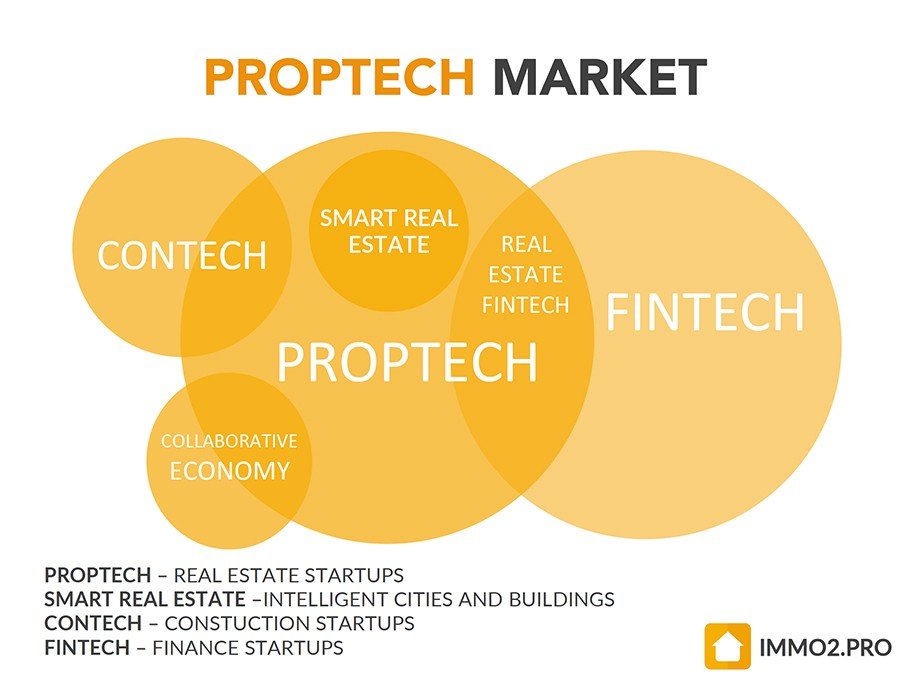
    Before we dwelve deeper in the PropTech space. What exactly is PropTech? There are also other terms like CRETech, ConTech, FinTech which are used in the space. Let us level set and review PropTech’s summary from a Medium article.

    In short, PropTech stands for all the companies that are taking on the real estate industry to make it better, spurred by an ever-changing digital landscape and new consumption patterns. It is still a new trend, and its scope will surely evolve as time goes by. Today, several verticals emerge within PropTech: the real estate market per se (PropTech), smart cities and buildings, the sharing economy, the home building industry (ConTech) and finance (FinTech). Both ConTech and FinTech have very close ties with the real estate industry.

    Source: https://medium.com/@vincentlecamus/proptech-what-is-it
    Image for post

    For the purpose of this article, we will only look at the proptech or CREtech space as there are MANY areas within that.

    Why PropTech now?

    2020 has probably been one of the toughest years for those in Commercial Real Estate (CRE). Some property types, like office, are having an impact even WAY bigger than the Global Financial Crisis (GFC) of 2008. Why worry about PropTech when the industry is itself going through a big change? No sector is immune to technology disruption or innovation. It started with retail, digital media, financial services, and the list goes on. Real Estate actually has been slow to adopt technological change with a lot of innovation only happening in the past few years.

    You may have heard this before but COVID-19 has accelerated digital and technology transformation in the real estate industry. This sentiment is captured by Michael Beckerman in his blog:

    Thinking about my industry, real estate technology, this past year was one that experienced 10X adoption in 10 months. It was for all the wrong reasons, but the speed and pace of tech adoption were truly staggering in real estate (and in most businesses during the pandemic). Literally overnight, companies had no choice but to get their tech house in order and to scramble to adopt as many smart solutions as possible to be able to reopen in the safest and healthiest manner possible, operate effectively in a remote work environment, and meet the needs of their customer base who were demanding digital solutions to engage with.

    And as I reflect on what’s ahead for real estate tech and real estate in general, I truly believe we are about to enter the “Golden Age of Real Estate!” 

    Source: https://www.cretech.com/news/goodbye-2020-hello-golden-era-of-real-estate-2/

    Lay of the Land

    Now that we understand CRETech and its importance today, what are the various areas of innovation? CRETech is a broad area and we’re going to break it down. We’ll use the breakdown used by Venture Scanner which has research, data, and trends on 2020 real estate technology startups. Even the sample below is bound to give some a headache, but the idea is to look at the broad categories and see what kind of disruption or innovation is happening. Put another way, where is a lot of Venture Capital (VC) money flowing into?

    Long-TermSearch 
COMPASS 
Apartment List 
Quikr 
VivaReal 
zirc»mgno 
Life, Home, P&C Insurance 
dewtottacQe 
neos 
kin. 
hippo 
Jetty 
Micro Insurance 
Home Services 
houzz 
Thumbtack 
OND 
Porch 
Clutter 
REAL ESTATE 
TECHNOLOGY 
• VENTURE 
SCANNER 
Property Management 
BuildingEngines 
ResMan 
auildium• 
HOSTMAKER 
appf0110 
Manager 
Construction Management 
PROCORE 
O EquipmentShare 
KATERRA 
FIELDWIRE 
BUILDINGCONNECTED 
Opendoor 
theguarantors 
IOT Home 
@KeyMe 
Portfolio Management 
lendinvest 
roofstock 
A Netatmo 
view 
EIGHT 
SLEEP 
Facility Management 
eden ENTOUCH 
sms assist 
00 BUDDERFLY 
Osmartfrog 
tad00 
00 
Short-Term Search 
CADRE 
Venture Scanner has research, data, and trends 
on 2,020* real estate technology startups 
HouseCanary 
Hotel Tonight 
airbnb 
vacasa 
•cleartrip 
Real Estate Agent Tools 
O HomeLight 
• states title 
V Qualia 
ribbon Topa 
PLACESTER 
Commercial Search 
I Kr Space 
INDUSTRIOUS 
Obreather 
MINDSPACE 
FUNDRISE 
Indoor Mapping 
Matterport 
HOVER 
NAVVIS 
MODSY 
0000my 
The graphic above shows only a sampling of companies in each category. •Data cumulative through February 2021.

    Here are the major categories of innovation:

    • Property Search and Real Estate Agent Tools (Home, Rentals, Commercial): This spans home, rentals, vacation, office space, etc.
    • Insurance, Home Services, and Marketplaces: Our focus here is on the home, property, or rental insurance sector
    • IoT, Property & Facilities Management: IoT devices and software used to manage properties and improve efficiencies
    • Construction Management: Different from Construction Technology, which is more physical built focused
    • Portfolio Management / Investment Management: Software for managing assets, deals, and investors
    • Design and Indoor Mapping: Interior and exterior architecture and design software

    Investor Takeaways

    In this article, we looked at the definition of PropTech, the lay of the land, and the key segments. The key segments of PropTech and the companies therein give an idea of the kind of innovation disrupting the CRE industry. As an investor and sponsor, it is important to leverage the platforms that will improve the efficiency across the entire investment lifecycle as well as the property lifecycle. As real estate investors, though we don’t need to follow each company, each segment of disruption give us opportunities to leverage for our real estate portfolio.