Category: Ideas

Round up of investing ideas and insights that we can actually put to use to invest.

  • Key Players in the CRE Market

    Many property types within the Commercial Real Estate (CRE) market are generally agreed to have had a poor performance the past few years, largely due to the COVID-19 pandemic restrictions. Particularly, office and retail property types. The real question investors are asking themselves is whether or not it has the potential for an emphatic return, or if a commercial real estate focus is not likely to be a great long-term investing strategy. The opportunities for successful CRE investments are still there. There are still plenty of marketplaces exclusively geared towards CRE investment, which have uniquely positioned themselves in the broader real estate investing market.

    Before committing your resources to a given investment strategy, new investors should understand who the market players are for a CRE deal. Below is a thoroughly compiled list of the key players (roles) in the commercial real estate market, which then goes onto provide an additional link to a description of each role.

    Key Players in CRE :
    • Buyer & Seller
    • Brokers: Buy-side and Sell-side
    • Legal Counsel: Buy-side, Sell-side, and Lender Counsel
    • Mortgage Broker
    • Lender/Loan Officer
    • Title Company
    • Capital Partners/Investors
    • Property Management
    • Insurance Provider
    • Appraiser & Surveyor
    • Environmental Consultant
    • Accountant: Buy-side and Sell-side

    The following article shares a useful and detailed look at the key players in CRE. Refer to the link below. It provides key details about the key players in CRE’s marketplace.

    What Are The Key Players And What Are Their Roles In A Commercial Real Estate Transaction

    As a commercial real estate investor, either as a buyer or as a seller, you work with multiple parties to move a deal from discovery through to closing. To manage a deal process efficiently, it is of utmost importance to understand all of the key players in a commercial real estate transaction.

    GerCNergy.com (Administrator)
    https://getcnergy.com/knowledge-base/key-players-in-a-commercial-real-estate-transaction/
    Summary

    The above players all comprise parts of the CRE deal. It is important for a sophisticated investor to be familiar with the various players as they can understand the dynamics of a deal and align with the sponsors who will work with most of the players mentioned.

  • Key Players in the CRE Market

    Many property types within the Commercial Real Estate (CRE) market are generally agreed to have had a poor performance the past few years, largely due to the COVID-19 pandemic restrictions. Particularly, office and retail property types. The real question investors are asking themselves is whether or not it has the potential for an emphatic return, or if a commercial real estate focus is not likely to be a great long-term investing strategy. The opportunities for successful CRE investments are still there. There are still plenty of marketplaces exclusively geared towards CRE investment, which have uniquely positioned themselves in the broader real estate investing market.

    Before committing your resources to a given investment strategy, new investors should understand who the market players are for a CRE deal. Below is a thoroughly compiled list of the key players (roles) in the commercial real estate market, which then goes onto provide an additional link to a description of each role.

    Key Players in CRE :
    • Buyer & Seller
    • Brokers: Buy-side and Sell-side
    • Legal Counsel: Buy-side, Sell-side, and Lender Counsel
    • Mortgage Broker
    • Lender/Loan Officer
    • Title Company
    • Capital Partners/Investors
    • Property Management
    • Insurance Provider
    • Appraiser & Surveyor
    • Environmental Consultant
    • Accountant: Buy-side and Sell-side

    The following article shares a useful and detailed look at the key players in CRE. Refer to the link below. It provides key details about the key players in CRE’s marketplace.

    What Are The Key Players And What Are Their Roles In A Commercial Real Estate Transaction

    As a commercial real estate investor, either as a buyer or as a seller, you work with multiple parties to move a deal from discovery through to closing. To manage a deal process efficiently, it is of utmost importance to understand all of the key players in a commercial real estate transaction.

    GerCNergy.com (Administrator)
    https://getcnergy.com/knowledge-base/key-players-in-a-commercial-real-estate-transaction/
    Summary

    The above players all comprise parts of the CRE deal. It is important for a sophisticated investor to be familiar with the various players as they can understand the dynamics of a deal and align with the sponsors who will work with most of the players mentioned.

  • How the Green New Deal Would Impact Real Estate Investors

    Depending on your views on climate change, the Green New Deal framework will either conjure up enthusiasm, anxiety, or perhaps a combination of the two. The proposed bill, which has since been explained as a framework towards what we ought to work towards, calls for “maximum energy efficiency”. Based on scientific research, which concludes climate change is imminent and potentially disastrous, the proposal aims for net-zero emissions in the United States by 2050. As part of the plan to get there, this means every building in the country would need to be upgraded for maximal energy efficiency, water efficiency, safety, affordability, comfort, and durability.

    As of the start of 2020, approximately 40% of the United States’ carbon monoxide emissions come from either commercial or residential real estate buildings (Neiditch, Forbes). Many of the political proponents of the Green New Deal were pushing it behind the idea that up to $1 trillion of infrastructure and coastal real estate could be damaged by global warming by 2050. According to the Energy Information Administration (EIA), currently, there are approximately 5.6 million commercial real estate buildings in the United States. Specifically in New York City, as part of an ongoing effort to combat climate change, legislation was passed to force buildings that are larger than 25,000 square feet to make energy efficient alterations. The legislation mandates cutting down greenhouse gas emissions 40% by 2030 and 80% by 2050. While the parameters for smaller, residential buildings aren’t as explicit, it’s estimated 95 million homes will be impacted and the cost to owners will be in excess of $400 billion (Neiditch, Forbes).

    While the Green New Deal did not come close to passing as it was originally written and there is unlikely to be sweeping legislation on a national level to overhaul climate change, many cities and states are finding a balance between clean air and economic productivity. Unfortunately, a lot of this conversation tends to be intertwined with politics, but the reality is a rural area in Kentucky (as an example) is not going to have the same availability of economic or human capital resources as a metropolis, like New York or Los Angeles. The lack of availability of these resources puts constraints on the ability of certain regions to advance their technological capabilities, thereby making the real estate investment opportunities unattractive to potential investors.

    Though preparations to meet the 2030 and 2050 targets have begun, there are some more immediate upgrades property owners can make that aren’t as long-term oriented, including switching out lightbulbs for “smart” lighting, upgrading HVAC systems, installing remote-controlled window shades, painting roofs with light-reflecting paint, planting trees, and installing photovoltaics. Additionally, preparation for weatherization is key to having a more energy efficient property. Windows, doors, and insulation can all be switched out and there is legislation to include different types of incentives for property owners to make these changes. Upgrading electric and plumbing systems, as well as installing solar panels can make homes more marketable, considering these changes are becoming more prevalent to the point of necessity. Finally, the Green New Deal framework focuses heavily on “green spaces” – or lawns – that cover more than 40 million acres of land in the United States. Lawns limit biodiversity and encourage pesticide usage and emissions from lawnmowers. The Green New Deal supporters encourage the conversion of these spaces to victory gardens and the expansion of green landscape architecture practices. An example of this is xeriscaping, or sustainable, easy-to-maintain landscaping first used in arid regions, which uses native plants and limits turf areas. This can reduce outdoor water use by as much as 50%, saving water as well as the environment (Neiditch, Forbes).

    So, what does the ambitious Green New Deal framework and the implications it will have on commercial and residential real estate mean for investors? Firstly, investors should focus on high-tech, climate-resilient opportunities in the real estate market. Secondly, residential real estate owners who are not under pressure from legislators to make climate change friendly adjustments to their properties should do so anyway, otherwise they will be far less attractive to prospective investors. Finally, commercial real estate investors, who are under pressure to begin implementing climate change measures mandated by signed legislation, are going to face major hurdles with regards to cost cutting. This legislation poses further challenges to commercial real estate investors, who are already in a difficult position coming out of the pandemic, in addition to facing the necessity to transform their assets to handle the push towards digital transformation. One thing is for sure: the conversation will continue. Being prepared for change is the best way to not only save the environment, but your long-term financial stability as well.

  • How the Green New Deal Would Impact Real Estate Investors

    Depending on your views on climate change, the Green New Deal framework will either conjure up enthusiasm, anxiety, or perhaps a combination of the two. The proposed bill, which has since been explained as a framework towards what we ought to work towards, calls for “maximum energy efficiency”. Based on scientific research, which concludes climate change is imminent and potentially disastrous, the proposal aims for net-zero emissions in the United States by 2050. As part of the plan to get there, this means every building in the country would need to be upgraded for maximal energy efficiency, water efficiency, safety, affordability, comfort, and durability.

    As of the start of 2020, approximately 40% of the United States’ carbon monoxide emissions come from either commercial or residential real estate buildings (Neiditch, Forbes). Many of the political proponents of the Green New Deal were pushing it behind the idea that up to $1 trillion of infrastructure and coastal real estate could be damaged by global warming by 2050. According to the Energy Information Administration (EIA), currently, there are approximately 5.6 million commercial real estate buildings in the United States. Specifically in New York City, as part of an ongoing effort to combat climate change, legislation was passed to force buildings that are larger than 25,000 square feet to make energy efficient alterations. The legislation mandates cutting down greenhouse gas emissions 40% by 2030 and 80% by 2050. While the parameters for smaller, residential buildings aren’t as explicit, it’s estimated 95 million homes will be impacted and the cost to owners will be in excess of $400 billion (Neiditch, Forbes).

    While the Green New Deal did not come close to passing as it was originally written and there is unlikely to be sweeping legislation on a national level to overhaul climate change, many cities and states are finding a balance between clean air and economic productivity. Unfortunately, a lot of this conversation tends to be intertwined with politics, but the reality is a rural area in Kentucky (as an example) is not going to have the same availability of economic or human capital resources as a metropolis, like New York or Los Angeles. The lack of availability of these resources puts constraints on the ability of certain regions to advance their technological capabilities, thereby making the real estate investment opportunities unattractive to potential investors.

    Though preparations to meet the 2030 and 2050 targets have begun, there are some more immediate upgrades property owners can make that aren’t as long-term oriented, including switching out lightbulbs for “smart” lighting, upgrading HVAC systems, installing remote-controlled window shades, painting roofs with light-reflecting paint, planting trees, and installing photovoltaics. Additionally, preparation for weatherization is key to having a more energy efficient property. Windows, doors, and insulation can all be switched out and there is legislation to include different types of incentives for property owners to make these changes. Upgrading electric and plumbing systems, as well as installing solar panels can make homes more marketable, considering these changes are becoming more prevalent to the point of necessity. Finally, the Green New Deal framework focuses heavily on “green spaces” – or lawns – that cover more than 40 million acres of land in the United States. Lawns limit biodiversity and encourage pesticide usage and emissions from lawnmowers. The Green New Deal supporters encourage the conversion of these spaces to victory gardens and the expansion of green landscape architecture practices. An example of this is xeriscaping, or sustainable, easy-to-maintain landscaping first used in arid regions, which uses native plants and limits turf areas. This can reduce outdoor water use by as much as 50%, saving water as well as the environment (Neiditch, Forbes).

    So, what does the ambitious Green New Deal framework and the implications it will have on commercial and residential real estate mean for investors? Firstly, investors should focus on high-tech, climate-resilient opportunities in the real estate market. Secondly, residential real estate owners who are not under pressure from legislators to make climate change friendly adjustments to their properties should do so anyway, otherwise they will be far less attractive to prospective investors. Finally, commercial real estate investors, who are under pressure to begin implementing climate change measures mandated by signed legislation, are going to face major hurdles with regards to cost cutting. This legislation poses further challenges to commercial real estate investors, who are already in a difficult position coming out of the pandemic, in addition to facing the necessity to transform their assets to handle the push towards digital transformation. One thing is for sure: the conversation will continue. Being prepared for change is the best way to not only save the environment, but your long-term financial stability as well.

  • Homebuyers: Five Tips for Financing and Budgeting

    When it comes to home buying, there’s a well-known critical rule: Avoid purchasing more house than you can afford. However, what represents “affordable” will differ between homebuyers. Therefore, one of the most important things for a first-time home buyer to do is plan and budget in advance. Diving into a potential multi-decade financial commitment is one of the most daunting experiences for an individual (or a couple, for that matter) in their lives. It is also highly probable that it will be your most expensive purchase. Before doing so, strategically allocating your money is essential. Otherwise the costs are steep. Before you know it, you may quickly find yourself getting buried in financial hardship, or the ultimate worst nightmare: foreclosure. To avoid this, we recommend the following five tips for first-time homebuyers.

    1. Strongly consider getting started with the “28 Percent Rule”

    The “28 Percent Rule” dictates that your mortgage shouldn’t be more than 28% of your gross income each month. While the Federal Housing Administration (FHA) recommends a slightly more generous allowance of 31%, first-time homebuyers in particular ought to air on the side of caution, considering they are likely repaying some other forms of debt. Additionally, there are the normal monthly expenses (food, transportation, healthcare, etc.) that any working-class individuals would have to account for.

    2. Your down payment should dictate your home’s budget

    Generally, lenders will look for homebuyers to put at least 20% of the property’s purchase price in cash. Though you can utilize other resources to obtain an approval, such as private mortgage insurance (PMI), this will inflate your monthly mortgage payment by roughly 1% (Fuscaldo, Investopedia). It’s important to note that the PMI depends significantly on the size of the property, your credit score, and the potential for the value of the home to increase over time. It’s equally important to note that it is in your long-term best interest to avoid these kinds of instruments, as they’ll tie up more and more of your monthly disposable income in interest repayment. On top of everything else, it’s critical to remember closing costs, as they’ll cost you anywhere from 2-5% of the home’s purchasing price, depending on what state you live in (Fuscaldo, Investopedia). Avoid over-leveraging yourself. Put as much money down as you can afford to, but certainly aim for higher than the bare minimum 10%.

    3. Precisely track your debt-to-income ratio

    It’s a very well-known fact that mortgage lenders will look at a prospective homeowner’s debt-to-income ratio when determining if they will extend a loan to the borrower. Therefore, keeping track of this ratio on a monthly basis is a good benchmark for prospective homeowners to calculate themselves, in order to ultimately decide if a home they’re interested in is affordable. Suppose your gross monthly income is $5,000. Then, if your mortgage payment is $1,500 and the total of your other monthly financial obligations is $1,000, this puts your debt-to-income ratio at 50%. Qualified mortgage lenders very rarely will approve a borrower with a debt-to-income ratio above 43%. Thus, in the above example the hopeful homeowner would unlikely to get approved and even if they did, it’s probable they would be setting themselves up for failure.

    4. Don’t forget all homeowner expenses, not just the monthly mortgage

    There’s no question getting approved for a home loan is an essential step in the process, yet this is only one obligation (though it’s by far the largest). The tough reality is your monthly mortgage payment will not be your only reoccurring expense as a homeowner. Consider additional monthly homeowners’ insurance, utilities, repairs, and maintenance costs. Depending on the season, the snow will need to be shoveled, or the lawn will need to be mowed, or the shrubs will need to be trimmed. Many find that over time, the list just keeps growing. When you calculate the affordability of a home, you may find that an affordable $1,500 monthly mortgage payment is no longer palatable when you factor in an additional $1,000 in monthly expenses. This is a large reason behind the idea of putting a considerable downpayment on the home; it frees up money for those other monthly costs, rather than irresponsibly squandering it on interest.

    5. Settle on a property you can handle managing

    Not only are the additional monthly homeowner expenses important to factor in, but you also need to be mindful of the condition and size of the property. In a situation when you’re concerned about a large utility bill from heating or cooling, less is more. A 4,000-square-foot property that needs serious repair may be a tempting proposition, until it breaks the budget. You may find you’re better off financially with more of a picturesque small home on a quaint hill, in a quiet neighborhood instead. For your own benefit, have a construction or homeowner expert look into the homes specifications to ensure you haven’t missed anything vitally wrong.

    The bottom line is that to many, home ownership is still considered to be the American Dream. In reality, it can quickly turn into a financial nightmare when you miscalculate your monthly expenditures. First-time buyers in particular often want more than they can take on at that moment. Without taking the time to properly prepare for the single biggest purchase of one’s life, they can find themselves house-rich and cash-poor, leading to ultimate financial misery. We urge any future homebuyers to take the necessary preparation steps. Do not sign up for a dream you are not exceptionally confident you can afford.

  • Homebuyers: Five Tips for Financing and Budgeting

    When it comes to home buying, there’s a well-known critical rule: Avoid purchasing more house than you can afford. However, what represents “affordable” will differ between homebuyers. Therefore, one of the most important things for a first-time home buyer to do is plan and budget in advance. Diving into a potential multi-decade financial commitment is one of the most daunting experiences for an individual (or a couple, for that matter) in their lives. It is also highly probable that it will be your most expensive purchase. Before doing so, strategically allocating your money is essential. Otherwise the costs are steep. Before you know it, you may quickly find yourself getting buried in financial hardship, or the ultimate worst nightmare: foreclosure. To avoid this, we recommend the following five tips for first-time homebuyers.

    1. Strongly consider getting started with the “28 Percent Rule”

    The “28 Percent Rule” dictates that your mortgage shouldn’t be more than 28% of your gross income each month. While the Federal Housing Administration (FHA) recommends a slightly more generous allowance of 31%, first-time homebuyers in particular ought to air on the side of caution, considering they are likely repaying some other forms of debt. Additionally, there are the normal monthly expenses (food, transportation, healthcare, etc.) that any working-class individuals would have to account for.

    2. Your down payment should dictate your home’s budget

    Generally, lenders will look for homebuyers to put at least 20% of the property’s purchase price in cash. Though you can utilize other resources to obtain an approval, such as private mortgage insurance (PMI), this will inflate your monthly mortgage payment by roughly 1% (Fuscaldo, Investopedia). It’s important to note that the PMI depends significantly on the size of the property, your credit score, and the potential for the value of the home to increase over time. It’s equally important to note that it is in your long-term best interest to avoid these kinds of instruments, as they’ll tie up more and more of your monthly disposable income in interest repayment. On top of everything else, it’s critical to remember closing costs, as they’ll cost you anywhere from 2-5% of the home’s purchasing price, depending on what state you live in (Fuscaldo, Investopedia). Avoid over-leveraging yourself. Put as much money down as you can afford to, but certainly aim for higher than the bare minimum 10%.

    3. Precisely track your debt-to-income ratio

    It’s a very well-known fact that mortgage lenders will look at a prospective homeowner’s debt-to-income ratio when determining if they will extend a loan to the borrower. Therefore, keeping track of this ratio on a monthly basis is a good benchmark for prospective homeowners to calculate themselves, in order to ultimately decide if a home they’re interested in is affordable. Suppose your gross monthly income is $5,000. Then, if your mortgage payment is $1,500 and the total of your other monthly financial obligations is $1,000, this puts your debt-to-income ratio at 50%. Qualified mortgage lenders very rarely will approve a borrower with a debt-to-income ratio above 43%. Thus, in the above example the hopeful homeowner would unlikely to get approved and even if they did, it’s probable they would be setting themselves up for failure.

    4. Don’t forget all homeowner expenses, not just the monthly mortgage

    There’s no question getting approved for a home loan is an essential step in the process, yet this is only one obligation (though it’s by far the largest). The tough reality is your monthly mortgage payment will not be your only reoccurring expense as a homeowner. Consider additional monthly homeowners’ insurance, utilities, repairs, and maintenance costs. Depending on the season, the snow will need to be shoveled, or the lawn will need to be mowed, or the shrubs will need to be trimmed. Many find that over time, the list just keeps growing. When you calculate the affordability of a home, you may find that an affordable $1,500 monthly mortgage payment is no longer palatable when you factor in an additional $1,000 in monthly expenses. This is a large reason behind the idea of putting a considerable downpayment on the home; it frees up money for those other monthly costs, rather than irresponsibly squandering it on interest.

    5. Settle on a property you can handle managing

    Not only are the additional monthly homeowner expenses important to factor in, but you also need to be mindful of the condition and size of the property. In a situation when you’re concerned about a large utility bill from heating or cooling, less is more. A 4,000-square-foot property that needs serious repair may be a tempting proposition, until it breaks the budget. You may find you’re better off financially with more of a picturesque small home on a quaint hill, in a quiet neighborhood instead. For your own benefit, have a construction or homeowner expert look into the homes specifications to ensure you haven’t missed anything vitally wrong.

    The bottom line is that to many, home ownership is still considered to be the American Dream. In reality, it can quickly turn into a financial nightmare when you miscalculate your monthly expenditures. First-time buyers in particular often want more than they can take on at that moment. Without taking the time to properly prepare for the single biggest purchase of one’s life, they can find themselves house-rich and cash-poor, leading to ultimate financial misery. We urge any future homebuyers to take the necessary preparation steps. Do not sign up for a dream you are not exceptionally confident you can afford.

  • What is a REIG? The Pros and Cons

    A REIG (Real Estate Investment Group) is a group of private investors who invest almost exclusively in real estate by pooling money, knowledge, and/or time to acquire properties that generate income (Brummer, Millionacres). Investment strategies for REIGs will differ based on each group’s specific strengths. A REIG is not a real estate investment trust (REIT) or crowdfunding real estate venture, although superficially, they may appear similar. They both invest the majority of pooled funds in real estate or real estate debt, earn income primarily from real estate, and distribute most of the income back to the parties involved.

    Pros of a REIG

    A REIG is a way for you to have your investment funds backed by physical real estate while allowing you to leverage the collective buying power and experience of the group. Additionally, investing in real estate as a group can give you a less “hands on” approach to real estate investing, or more, depending on your desires and the strengths of your group. Furthermore, a REIG is a form of “diversification” in the sense that your thoughts about the financial incentives of an acquisition may be different than your partners in the group. Of course, this can be a negative if you are unable to persuade others investors in the group and the property turns out to be a successful investment. However if you surround yourself with like-minded investors, which is generally the case for most REIGs, this is unlikely to occur often. Going back to buying power, groups of investors can pool a very substantial amount of money together. This would in turn allow them to invest greater sums of cash and diversify their investments over a greater number of real estate properties. Conversely, an individual investor may only have enough capital to put into one – or a few – properties that may wind up taking an unexpected downturn. Finally, there’s a benefit to having fellow investors with the same stakes you do because you have the opportunity to learn from them. You would be able to potentially use some of those successful strategies in your own personal real estate investments.

    Cons of a REIG

    Many cons to a REIG can also be viewed as strengths, depending on the amount of weight you pull in it. For example, a more “hands-off” approach to investing through a REIG can turn detrimental if the individual(s) responsible for the “hands-on” tasks do a poor job. Additionally, since REIGs pool your investment money with others, you lose out on some profit prospective with it being shared throughout the group. To the contrast, this could be viewed as a way to mitigate your conceivable losses – as mentioned in the strengths – but skilled real estate investors rarely have a pessimistic view of investments they are willing to enter into. While some view this as insignificant, the tax structure and fees associated with REIGs similarly lower your bottom line profit. Along the same lines, due to regulations and commonplace agreements signed between the parties, pulling your money out of the REIG can be burdensome and costly. Finally, many investors are prone to different management styles, have different investment goals, and differ in many other germane ways. Conflicts arising from disagreements between members in a REIG can lead to not only unfavorable financial outcomes, but it can go as far as breaking up the REIG.

    Concisely, REIGs are a good fit for novice or expect real estate investors, as well as everything in between. From our perspective, the concept seems like it would be a better fit for those looking to enter the real estate market, rapidly expand their presence in that market, or if you have unique knowledge, but do not have the cash saved to personally invest in real estate yet. Reviewing the pros and cons alone, unfortunately, does not provide enough guidance as to whether or not this is the right investment vehicle for you. As with most financial investments, REIGs can be beneficial or detrimental for you, completely dependent on your financial situation, knowledge of the real estate market, and more. We do believe that an invaluable positive to REIGs is the knowledge potential from other investors in your group. Some of the most successful investors from different parts of the globe have said that intellectual capital can prove to be exponentially more valuable than simply having excess cash in a savings account, with no unique or constructive ideas on how to put that capital to use in order to maximize a positive return. 

  • Passive Real Estate Investing

    When reading about real estate investing, often times investors think of active real estate investors, who are essentially landlords. There are also both direct and indirect passive real estate investors. Passive real estate investing is investing in real estate without substantial hands-on effort or active participation from the investor. They invest through syndications, online crowdfunding, individual real estate funds, and real estate investment trusts. In fact, many would argue passive real estate investing requires the least experience and hassle while offering more diversification and liquidity.

    Direct Passive Real Estate Investing

    With direct real estate investing, an investor will purchase a property or portion of a property that is subsequently rented out. Often, real estate investors that purchase entire properties will hire what is known as a property manager, or property management company, to take care of the day to day maintenance and tasks such as collecting rent. Post-purchase of the property, hiring a property management company allows an investor to essentially be hands-off in the management of the property. Hence the term passive real estate investing in this context.

    Indirect Passive Real Estate Investing

    To the contrary, indirect real estate investing is a process where individuals invest in a REIT (Real Estate Investment Trust) or a real estate related mutual fund. This type of real estate investing is considered passive because there is no day-to-day management needed and it’s also considered indirect because it doesn’t involve a specific piece of real estate. Investors then collect passive income as returns or dividends from funds.

    Regardless of which method you prefer, there is a great potential for positive cash flow and overall wealth generation in real estate investment markets. In upcoming posts, we’ll dive into more specifics about REITs, as well as other types of real estate funds investors are often more drawn to.

  • What Exactly is a Subprime Mortgage?

    What Exactly is a Subprime Mortgage?

    A subprime mortgage is a type of housing loan granted to individual with a poor credit score – 640 or less (and even below 600) – who, as a result of their poor credit rating would not qualify for more conventional mortgages. The term subprime itself is referring specifically to the borrower’s credit score – thus their ability to pay back their financial obligation – rather than the financial agreement embedded in the loan itself. Subprime borrowers are implicitly more likely to default than others with a higher credit score.

    Types of Subprime Mortgages

    In essence, subprime mortgages are mortgages given to subprime borrowers. The main types of subprime mortgages include fixed-rate mortgages with 40- to 50-year terms, interest-only mortgages, and adjustable rate mortgages (ARMs).

    Fixed-Interest Mortgages

    One type of subprime mortgage is a fixed-rate mortgage, given for a 40- or 50-year term, in contrast to the standard 30-year period. This lengthy loan period lowers the borrower’s monthly payments, but it is more likely to be accompanied by a higher interest rate. The interest rates available for fixed-interest mortgages can vary substantially from lender to lender. Higher interest rates over a lengthy period of time means the borrower will be under constant pressure to meet their monthly obligations over a prolonged period of time; additionally, it means that the lender will gain a lot of interest of their principal if the loan is paid off.

    Adjustable-Rate Mortgages

    An adjustable-rate mortgage starts out with a fixed interest rate and later, during the life of the loan, switches to a floating rate. One common example is the 2/28 ARM. The 2/28 ARM is a 30-year mortgage with a fixed interest rate for two years before being adjusted. Another typical version of the ARM loan, the 3/27 ARM, has a fixed interest rate for three years before it becomes variable.

    In these types of loans, the floating rate is determined based on an index plus a margin. A commonly used index is ICE LIBOR. With ARMs, the borrower’s monthly payments are usually lower during the initial term. However, when their mortgages reset to the higher, variable rate, mortgage payments usually increase significantly. Of course, the interest rate could decrease over time, depending on the index and economic conditions, which, in turn, would shrink the payment amount.

    According to CNN Money’s Les Christie, “ARMs played a huge role in the crisis”. When home prices started to drop, many homeowners understood that their homes weren’t worth the amount the purchase price. This, coupled with the rise in interest rates led to a massive amount of default. This led to a drastic increase in the number of subprime mortgage foreclosures in August of 2006 and the bursting of the housing bubble that ensued the following year.

    Interest-Only Mortgages

    The third type of subprime mortgage is an interest-only mortgage. For the initial term of the loan, which is typically five, seven, or 10 years, principal payments are postponed so the borrower only pays interest. He can choose to make payments toward the principal, but these payments are not required.

    When this term ends, the borrower begins paying off the principal, or he can choose to refinance the mortgage. This can be a smart option for a borrower if his income tends to fluctuate from year to year, or if he would like to buy a home and is expecting his income to rise within a few years.

    Dignity Mortgages

    The dignity mortgage is a ‘new type of subprime loan’, in which the borrower makes a down payment of about 10% and agrees to pay a higher rate interest for a set period, usually for five years. If he makes the monthly payments on time, after five years, the amount that has been paid toward interest goes toward reducing the balance on the mortgage, and the interest rate is lowered to the prime rate.

  • What is a Tri-Party Repo (TREPS)and How Did the Market Operate?

    What is a Tri-Party Repo (TREPS)and How Did the Market Operate?

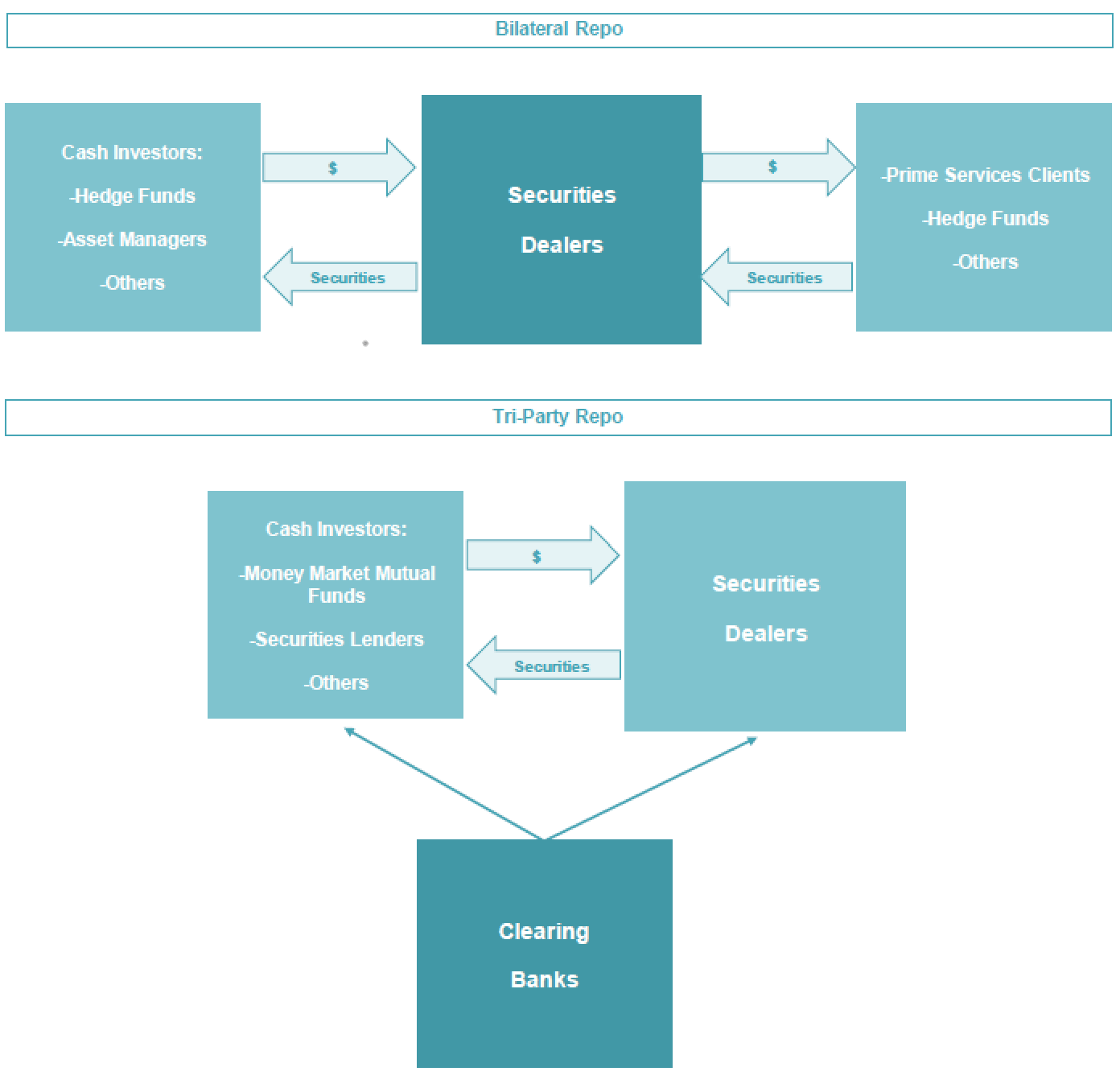
    The simplest way to understand a tri-party repo (TREPS) is to think of it as a simple repurchase agreement between two parties, where a third-party – historically a very large and reputable bank (only JPM Chase or BNY Mellon, during the time these transactions were widely common) – processes administrative work and even guarantees the cash provided by Company A to Company B and the collateral Company B secures the cash from Company A with. These third parties, commonly referred to as clearing banks, also performed valuation services to ensure the collateral put up by Company B was within the approximate fair market value of the cash lent by Company A.

    Tri-Party Repos in the Derivative Era

    These transactions actually became popular at the “boom” of the derivative trading era – even though they had a comparatively low-yield percentage for both companies – mainly because of mechanics of how these transactions occurred. They were typically cleared and settled overnight, so the investment banker would have the cash available in the morning when the trading day began. The “unwinding” process of this repo would also happen after the trading day was complete; the dealer (Company B) would finance the broker (Company A) with cash and the third-party clearing bank would take care of the rest for a small fee.

    To be clear, the responsibilities of the clearing banks weren’t minuscule, they were tasked with: taking custody of the securities involved in the repo, valuing the securities and making sure that the specified margin is applied, settling the transaction on their books, and offer services to help dealers optimize the use of their collateral. However as mentioned, to give dealers access to their securities during the day, the clearing banks settle all repos very early each day, returning cash to cash investors and collateral to dealers. This would lead to a delay in real-time settlement, therefore in reality the clearing banks wind up extending hundreds of billions of intraday credit to the dealers until new repos are settled in the evening.

    Role in 2008 Financial Crisis

    It’s argued by many to have played an underscored role in the 2008 US Financial Crisis, primarily because between 2007-2009 these repurchase agreements became a common daily routine for almost all of the largest brokers and dealers in the world. This was for several logical reasons. Firstly, it made sense for securities brokers to engage in because they have access to cash immediately, the second the daily trading day begins.

    It equally makes sense for dealers. They are receiving a profit from lending cash and they have the comfort of knowing their cash is backed by collateral that was signed off on by either JPMC or BNYM. Finally, it makes sense for the clearing bank to use their economies of scale and human resources to make a couple percentage points. At the time this was thought to be routine administrative clearing bank procedure. However, it turned out to be a much bigger nightmare than ever imagined.

    The nightmare catch is best described by the following scenario. Contemplate what happens if you have a very large and highly levered broker, like Bear Sterns as the famous example. You then encounter a situation where financial markets they have heavy exposure in drop sharply. The collateral a broker like Bear Sterns would put up would be in the form of a portfolio of securities. They wouldn’t contribute any physical assets, or guaranteed/risk-less investments (like T-Notes).

    Where Systemic Financial Fragility and Potential Crisis Begins

    Now you have a situation where the dealer (Company B) may not feel as comfortable providing liquid cash financing to Bear Sterns anymore. Then you essentially have the clearing bank – JPM Chase or BNY Mellon – incurring the loss because the process was done so hastily. They almost certainly never took the time to deeply look into whether the collateral put up by Bear Sterns was equal in liquid valuation to the cash provided by their various dealers (who by the way would usually be institutions like secondary education private schools, or institutions in a medical (or other) field with a surplus of cash), so the settlement process only occurred on paper for them.

    When things went south, even though the clearing banks do not match dealers with cash investors. Nor do they play the role of broker in that market. They had to settle disproportionately valued securities with the most liquid form of financial currency: cash. Looking at Bear Sterns, they would’ve used dozens of cash lenders to diversify. Even more so the clearing banks would be incentivized to not look too closely at their spotted collateral. Picture what happens if you have Lehman Brothers, Goldman Sachs, and Morgan Stanley incurring the same scenarios. The same day, as well. Of course Goldman Sachs and Morgan Stanley are two of the most prestigious investment banks in the world. Likely not enough of their total portfolio was invested in the tri-party repo market to cause them to fail.

    Conclusion

    However when that market did ultimately fail, things went that route for Lehman and Bear Sterns. Concisely, while on the surface a tri-party repo is a simple repurchase agreement where a third party provides administrative surfaces at a small fee for the two companies engaged in the repo, understanding the mechanics of it are invaluable to appreciating how some financial markets collapsed so rapidly in late 2008.